Latin Jazz Network
  • Home
  • About
  • Contact
  • Featured
    • Festival Report
    • New York Report
  • Featured Events
  • News
  • Reviews
    • Albums
      • Essentials
      • Tropical Report
      • Brasilian Report
    • Books
    • Concerts
    • DVD-Movies
  • Interviews
  • Promotions
    • EPK
  • Playlists
  • Podcasts
  • Artist Profiles
    • Tribute to the Masters
  • Photo Galleries
  • Featured Videos
  • 25 Most Read Posts
Connect with us
Latin Jazz Network Latin Jazz Network

Latin Jazz Network

Mark Weinstein – El Cumbanchero

  • About
  • Contact
  • thatcanadianmag
  • worldmusicreport

Albums

Mark Weinstein – El Cumbanchero

Published

15 years ago

on

Apr 16, 2012

By

Raul Da Gama
  • Share
  • Tweet

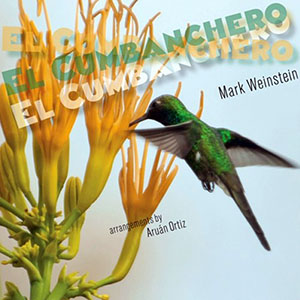
Mark Weinstein - El CumbancheroIt might seem foolhardy to many to take a chance and make an entire record based on “charanga”; perceived as rather old-fashioned too considering the rising eminence of the goldmine of what is now salsa—a common misnomer for all things Afro-Cuban. But not for flute maestro, Mark Weinstein, who, four years ago in a great leap of faith—literally—made, with Omar Sosa, Tales From The Earth a record that raised the spirit of the Holocaust and indeed the spirit of all who perished in the hatred of racism (Ota, 2009). That was certainly a lot more risqué and unfashionable compared to this record; still, however, the fact is that Weinstein will not shy away from taking a chance on almost anything. Another fact about the flutist—borne out yet again on this record—is that he has the uncanny knack of finding the finest musical associates to collaborate with on projects. A case in point: the monstrously talented Cuban born pianist, Aruán Ortiz, who has not only played magnificently on this record, but who has also contributed the most exquisite and authentic “charanga” arrangements on this album.

The album literally explodes from the gates with an up-tempo version of “El Cumbanchero,” not only a title track, but a torch song for an era of music and dance that is all but forgotten about Cuba, a country that is bristles with an almost magical musical heritage. The record also pulsates with the undying heart of a classic “charanga” ensemble. There is the virtuoso artistry of flutist, Weinstein at the helm of affairs; but his art is also elevated by two magnificent string, bass and rhythm sections. The first is one consisting of violinists Francisco Salazar and Everhard Parades, cellist, Brian Sanders and on all but one of this ensemble’s tracks, the conguero, Yusnier Sánchez Bustamante. Not only does this ensemble bristle with energy and kinetics on “El Cumbanchero,” but it also shocks the body into involuntary dancing on “La Mulata Rumbera” and Sindo Garay’s classic “Perla Marina”.

The second ensemble comprises violinist Marc Szammer and Elena Rojas Crocker; plus virtuoso cellist Aristides Rivas. This group, together with Weinstein and Ortiz is responsible for the sublime work on the reverential “Doña Olga” as well as “Armoniosos de Amalia,” “Danzón de Liz” and the wistful “Contigo en la Distancia”. The two originals from the pen of Ortiz, “; Aruancó” and the frisky “Av. Pintor Tapiro” are played by just Weinstein, Ortiz and the majestic rhythm section including master percussionist Mauricio Herrera on conga, timbales and guiro and the remarkably melodic bassist, Yunior Terry. Aristides Rivas joins the quartet on Ortiz’s “Av. Pintor Tapiro”.

Despite the seemingly traditional setup, Weinstein and Ortiz ring in the changes on almost every chart, breaking free of the formality and rigidity of the programmatic “charanga” charts. The harmonics for the charts flow in new and diaphanous; almost swooning waves of emotion. There is an almost visual element to the flexibility of the bodies of the dancers were these to be present during the recording. As it is the couples pirouetting sensuously in figures of eight are almost conjured up on this record of beauty and utter memorability. But although this aspect of artistry is nothing new for both Mark Weinstein and Aruán Ortiz, it must nevertheless be praised for its splendor.

Tracks: 1. El Cumbanchero; 2. La Mulata Rumbera; 3. Doña Olga; 4. Aruancó; 5. Av. Pintor Tapiro; 6. Perla Marina; 7. Armoniosos de Amalia; 8. Danzón de Liz; 9. Contigo en la Distancia.

Personnel: Mark Weinstein: concert, alto and bass flutes; Aruán Ortiz: piano, arrangements; Yunior Terry: bass; Mauricio Herrera: timbales, conga, guiro; Yusnier Sánchez Bustamante: conga (1, 2, 4); Marc Szammer: violin (3, 7, 8, 9); Elena Rojas Crocker: violin (3, 7, 8, 9); Francisco Salazar: violin (1, 2, 6); Everhard Parades: violin (1, 2, 6); Samuel Marchán: viola; Aristides Rivas: cello (3, 5, 7, 8, 9); Brian Sanders: cello (1, 2, 6).

Label: Jazzheads Records | Release date: November 2011

Website: jazzfluteweinstein.com | Buy music on: amazon

About Mark Weinstein

Flutist, composer and arranger, Mark Weinstein began his study of music at age six with piano lessons from the neighborhood teacher in Fort Green Projects in Brooklyn where he was raised. Between then and age 14 when he started to play trombone in Erasmus Hall High School, he tried clarinet and drums. Playing his first professional gig on trombone at 15, he added string bass, a common double in NYC at that time.

Mark learned to play Latin bass from Salsa bandleader Larry Harlow. He experimented playing trombone with Harlow’s band and three years later, along with Barry Rogers, formed Eddie Palmieri’s first trombone section, changing the sound of salsa forever. With his heart in jazz, Weinstein was a major contributor to the development of the salsa trombone playing and arranging. He extended jazz attitudes and techniques in his playing with salsa bands. His arrangements broadened the harmonic base of salsa while introducing folkloric elements for authenticity and depth. The only horn in a Latin jazz quintet led by Larry Harlow at the jam session band at Schenks Paramount Hotel in the Catskills, soloist and arranger with Charlie Palmieri in the first trumpet and trombone salsa band in NYC, arranger and featured soloist along with the great Cuban trumpet player Alfredo Chocolate Armenteros in Orchestra Harlow, and with the Panamanian giant Victer Paz in the La Playa Sextet, and with the Alegre All Stars, Mark’s playing and arranging was a major influence on Salsa trombone and brass writing in the 60s and 70s.

In the early 1970?s Mark took time off from music to earn a Ph.D in Philosophy with a specialization in mathematical logic. He became a college professor and remains so until this day. When he returned to the music scene in 1978 playing the flute, he wrote produced and recorded the Orisha Suites with singer Olympia Alfara, the great Colombian jazz pianist Eddy Martinez and percussionists Steve Berrios, Julito Collazo, Papaito and Papiro along with an Afro-Cuban chorus. Unreleased until recently, music from the Orisha Suites became the theme for Roger Dawson’s Sunday Salsa Show on WRVR. Because of limited distribution and more demand that albums available, Mark rerecorded the material from the original Cuban Roots with new arrangements and the help of such giants of Cuban music as pianist Omar Sosa, percussionists Francisco Aquabella, Lazaro Galarraga, John Santos, Jose De Leon, and Nengue Hernandez. It was co-produced with his nephew, trombonist, violinist and arranger Dan Weinstein for Michael McFadin and CuBop Records.

In 2002 Mark had the incredible opportunity to go to Kiev, Ukraine, where his father was born, to record the music of the Ukrainian composer Alexey Kharchenko. Milling Time, the record that they made, stretched his playing in a number of directions, from modern classical music to smooth jazz to Ukrainian folk music. He continued his exploration of his roots with a jazz album of Jewish music with Mike Richmond on bass, Brad Shepik on guitar and Jamey Haddad on drums and percussion. He then turned to Brazil and the music of Hermeto Pascoal’s Calendario do Som, entitled Tudo de Bom with guitarist and vocalist Richard Boukas, Nilson Matta on bass, Paulo Braga on drums and Vanderlei Pereira on percussion.

In 2005 he began his ongoing association with Jazzheads record recording another version of Cuban Roots called Algo Más, with Jean Paul Bourelly playing electric guitar, Santi Debriano on bass, Thelonious Monk award winning percussionist and vocalist Pedrito Martinez, as well as Nani Santiago, Gene Golden and Skip Burney on congas and batá drums. His next release on Jazzheads was O Nosso Amor with Brazilian jazz masters Romero Lubambo, Nilson Matta and Paulo Braga along with percussionists Guilherme Franco and Jorge Silva. This was followed by Con Alma, a Latin Jazz album featuring Mark Levine on piano, Santi Debriano on bass, Pedrito Martinez playing conga and drummer Mauricio Hererra. Next a straight-ahead album, Straight No Chaser, with guitarist Dave Stryker, bassist Ron Howard and Victor Lewis on drums. A return to Brazilian music, Lua e Sol, saw Romero Lubambo and Nilson Mata joined by award winning percussionist Cyro Baptista.

Mark took time out from Jazzheads to record an album for Otá records in Berlin with Grammy nominated pianist Omar Sosa playing vibes, marimbas and piano along with Ali Keita on balafon, Mathais Ogbukoa and Aho Luc Nicaise on African percussion, bassist Stanislou Michalou and Marque Gilmore on drums. Back to Jazzheads, Mark recorded Timbasa with the percussion team of Pedrito Martinez and Mauricio Hererra, joined by Ramon Diaz with the young giants Axel Laugart on piano and bassist Panagiotis Andreou. This was followed by Jazz Brasil with NEH Jazzmaster Kenny Barron on piano along with Nilson Matta and drummer Marcello Pellitteri. His most recent album, El Cumbanchero was recorded with a string ensemble and arranged by Cuban piano virtuoso Aruán Ortiz, along with Yunior Terry on bass and percussionists Mauricio Herrera and Yusnier Bustamante.

Next up is an album of tangos with GRAMMY and Latin GRAMMY nominee, bassist Pablo Aslan, and featuring Latin GRAMMY winner Raul Jaurena playing the bandoneon, pianist Abel Rongatoni and guitarist Francisco Navarro. And many more surprises to come.

(Source: jazzfluteweinstein.com)

Related Topics:Aristides RivasAruán OrtízBrian SandersFrancisco SalazarJazzheads RecordsMarc SzammerMark WeinsteinMauricio HerreraSamuel MarchánYunior TerryYusnier Sánchez Bustamante
Raul Da Gama

Based in Milton, Ontario, Canada, Raul is a poet, musician and an accomplished critic whose profound analysis is reinforced by his deep understanding of music, technically as well as historically.

You may like

  • Trombonist Conrad Herwig - Photo by Atael Weissman Trombonist Conrad Herwig - Photo by Atael Weissman

    The Latin Side of Chick Corea: Conrad Herwig Reimagines a Jazz Master

  • Bobby Sanabria Multiverse Big Band - Arsenio and Beyond Bobby Sanabria Multiverse Big Band - Arsenio and Beyond

    Bobby Sanabria Brings Arsenio Rodríguez’s Legacy to Life on “Arsenio and Beyond”

  • Michael Eckroth Group Michael Eckroth Group

    Michael Eckroth Group – Human Geography

Click to comment

Leave a Reply

Cancel reply

Your email address will not be published. Required fields are marked *

Albums

Claudia Acuña – Ave de Luz: Chilean Jazz and Soul – A Bird of Light Returns Home

Published

1 month ago

on

Sep 23, 2026

By

Danilo Navas
Singer Songwriter Claudia Acuña

For Claudia Acuña, home has never been a fixed destination. It is something carried—in the body, in memory, in language, and in sound.

On Ave de Luz, the Chilean vocalist brings those fragments together with unusual clarity. After three decades in New York, Acuña no longer treats her roots as something to weave quietly into jazz. She places them at the center. Her striking declaration—“I’m coming in with my crown, my poncho, my everything”—captures the album’s spirit perfectly.

Raised in Concepción during Chile’s dictatorship years and later transformed by New York’s jazz scene, Acuña has spent much of her career moving between worlds. Ave de Luz feels like the moment when those worlds stop competing with one another.

Claudia Acuña – Ave de Luz: Chilean Jazz and Soul (album cover)

A Specifically Chilean Jazz

Acuña has resisted the idea that “Latin jazz” can be reduced to a single vocabulary. Afro-Cuban and Brazilian traditions may dominate the popular understanding of the term, but Latin America contains countless rhythmic, folkloric and indigenous languages.

Her own metaphor is simple: noodles and spaghetti may look related, but they are not the same thing.

That idea shapes Ave de Luz. The album is not merely jazz with Chilean colour added to it. It is music whose identity emerges from cueca, Andean traditions, indigenous sonorities, poetry, migration and improvisation.

The trutruka, charango, zampoña, tormento and Chilean pandero become part of the album’s grammar. They interact with Manu Koch’s piano and keyboards, Carlos Henderson’s bass and Yayo Serka’s drums and percussion without sounding ornamental or exoticized.

Poetry, Memory and Resistance

“Chinga La Ka Chinga” captures one of the album’s most expansive ideas. Festive on the surface, the piece also acknowledges Afro-Chilean and northern Chilean currents, suggesting how celebration can carry history, resistance and cultural memory within its pulse.

Elsewhere, the music turns inward. “Piececitos de Niño,” inspired by Gabriela Mistral, brings poetry and childhood into the album’s emotional landscape, while “Rezo” feels almost elemental: voice, charango, atmosphere and silence shaping a meditation on nature, distance and belonging.

Acuña’s reading of Violeta Parra’s “La Jardinera” is equally significant. Its imagery of planting, tending and healing becomes an apt metaphor for tradition itself. Culture survives not by remaining untouched, but by being replanted. Acuña does precisely that.

The Wind From the South

“Viento del Sur” also carries special resonance, recalling the title of Acuña’s 2000 debut, Wind from the South. Then, the image suggested a Chilean artist arriving in the international jazz world. Here, the meaning has changed.

The south is no longer where she came from. It is something she continues to carry.

That idea finds its fullest expression in the title track. The “bird of light” becomes an image of migration without erasure—a figure moving forward while remaining connected to its place of origin. The metaphor fits Acuña herself.

Her longtime musical relationship with Koch, Henderson and Serka gives Ave de Luz much of its freedom. Years of trust let the ensemble move naturally between folk memory, jazz improvisation and contemporary textures without forcing boundaries between them.

Ave de Luz may be Claudia Acuña’s most complete artistic statement because it no longer asks her identities to compromise.

The crown is experience.
The poncho is memory.
Jazz is the road between them.

And Claudia Acuña travels that road carrying Chile fully into the light.

PLAYLIST (7 TRACKS) – CLAUDIA ACUÑA – AVE DE LUZ

Album Information

  • Artist: Claudia Acuña
  • Album: Ave de Luz: Chilean Jazz & Soul
  • Label: Delfin Records
  • Release date: July 10, 2026
  • Genre: Jazz / Vocal Jazz / Chilean jazz
  • Format: Digital/streaming
  • Final digital release: 7 tracks, approximately 36 minutes

Tracklist

  1. Chinga La Ka Chinga – (Claudia Acuña, Coch, Hernandez & Serka) – 4:43
  2. Ave de Luz– (Mario Rojas) – 5:48
  3. Viento del Sur– (Claudia Acuña & Jason Lindner) – 6:01
  4. Rezo– (Claudia Acuña) – 3:49
  5. Piececitos de Niño– (Based on a poem of Gabriela Mistral / Music by Claudia Acuña) – 6:10
  6. Un Gorro de Lana– (Víctor Acosta) – 4:18
  7. La Jardinera– (Violeta Parra) – 6:01

Personnel

  • Claudia Acuña – vocals, percussion/claps, tormento; producer
  • Manu Koch – piano and keyboards (tracks 1, 2, 3, 5)
  • Carlos Henderson – bass
  • Yayo Serka – drums and percussion
  • Pablo Vergara – piano (tracks 6, 8)
  • Andrés Pollak – piano, organ; producer (track 7) | organ (track 1)
  • Pablo Zárate – accordion, Chilean pandero (track 2)
  • Fredy Torralba – traditional Chilean/Andean instruments including charango, trutruka and zampoña
  • Paulina García – spoken word (track 6)
  • Daniel Kelley-Acuña – vocals (track 6)

Production Credits

Produced by Claudia Acuña and Andrés Pollak. Most of the sessions were recorded at East Side Sound in New York in November 2025, with “Ave de Luz” recorded at TOC Música in Santiago in October 2025 and additional recording completed at Banduria Studio in Santiago. Andrés Pollak handled engineering on the principal New York sessions; Rafael Chaparro engineered the Santiago title-track session with Javier Lizana assisting. Marc Urselli mixed and mastered the project.

Continue Reading

Albums

Eva Cortés’ La Malinche: Between Memory, Identity and Resistance

Published

2 months ago

on

Sep 21, 2026

By

Danilo Navas
Eva Cortés - Photo courtesy of the artist
Jazz Vocalist, Composer and Songwriter Eva Cortés

With La Malinche, Eva Cortés delivers one of the most ambitious recordings of her career—a project in which history, identity, migration and music converge around one of the most contested figures in the Americas.

Malintzin, also known as Doña Marina or La Malinche, has long been portrayed through conflicting narratives: interpreter, intermediary, mother of mestizaje, victim, survivor and, in later nationalist mythology, traitor. Cortés does not try to settle that debate. Instead, she uses Malintzin as a symbol of cultural transition, displacement and survival.

That choice makes particular sense for an artist whose own life has unfolded across borders. Born in Honduras (Central America), shaped culturally in Seville (Spain) and later immersed in New York’s jazz community, Cortés has always made music from the space between traditions. On La Malinche, that in-between space becomes the heart of the album.

La Malinche - Eva Cortés (album cover)
La Malinche – Eva Cortés (album cover)

A Music of Crossings

The album brings together flamenco, Latin jazz, contemporary jazz and Indigenous-inspired imagery without turning the result into a forced fusion.

Rather than attempting to recreate pre-Columbian Mexican music literally, Cortés evokes Indigenous memory through percussion, communal voices, repetition and themes of ancestry, earth and maize. Flamenco enters through Spanish guitar, vocal inflection and the expressive grit associated with cante. Jazz supplies the harmonic freedom and improvisational space that allow those elements to interact.

The musicians surrounding Cortés are crucial to that balance. Pianists Pepe Rivero, Jon Cowherd and Zaccai Curtis, bassists Christian McBride, Luques Curtis and Reinier Elizarde “Negrón,” and drummers Antonio Sánchez, Adam Cruz and Georvis Pico give the album both rhythmic strength and harmonic flexibility. Roman Filiú, Paco Heredia, Marvin Sewell, Bandolero and others expand the palette further. The result is music that never feels boxed into one category.

The Voice at the Center

Cortés’ singing remains the album’s most powerful instrument. Her phrasing can be loose and conversational, then suddenly sharpen into something more urgent and flamenco-inflected. She moves between reflection, mourning, protest and defiance without sacrificing musical control.

Most importantly, she refuses to define Malintzin through betrayal. Her interpretation focuses instead on endurance and complexity.

The opening “Abuelita Malinche” immediately makes that clear. By calling her “Abuelita,” Cortés transforms Malinche from a figure of accusation into an ancestral presence. The arrangement blends Latin-jazz movement with flamenco coloration, while her wordless vocal passages move naturally between scat and cante.

“Hij@s del Maíz” extends that idea of cultural mixture. Paco Heredia’s guitar, Pepe Rivero’s piano, Antonio Sánchez’s drums and the accordion create a sound that travels across regions rather than belonging to one. Maize becomes a symbol of Indigenous continuity, while the music reflects the constantly changing character of mestizaje itself.

From History to the Present

The album becomes even more powerful when it connects the past to contemporary realities.

“Letters to Heaven” and “Remember Me” introduce themes of Indigenous loss and the disappearance of women from both historical memory and present-day communities. “Sur Global” shifts toward resistance, combining rhythmic drive with a broader reflection on colonialism, migration and inequality.

Then “Spanish Harlem” brings the journey firmly into the present. Horns, flute, tumbao and call-and-response place Cortés within New York’s Latin-jazz tradition, completing a musical path that stretches from ancestral memory to the modern city.

A Major Statement

La Malinche is more than an album built around a historical figure. It is a meditation on who controls history, who gets remembered and how identity continues to change across generations and borders.

Cortés turns her own musical hybridity into the album’s central idea. Jazz, flamenco and Latin American traditions do not simply coexist here—they help tell the story.

The result is one of her strongest and most focused recordings to date: emotionally direct, musically sophisticated and deeply rooted in the ongoing conversation between memory and transformation. La Malinche is not about recovering a pure past. It is about reclaiming the right to reinterpret it.

PLAYLIST (11 TRACKS) – EVA CORTÉS – LA MALINCHE

Album Information

  • Artist: Eva Cortés
  • Album: La Malinche
  • Label: Truth Revolution Records / TRRcollective
  • Release: June 2026
  • Official press release date: June 5, 2026
  • TRRcollective Bandcamp release date: June 19, 2026
  • Format: CD / Digital
  • Number of tracks: 11
  • Total running time: 51:53
  • Genre: Jazz / Latin Jazz / Flamenco / Afro-Latin
  • Recorded in: Madrid, Spain, and Little Falls, New Jersey, USA

Tracklist

  1. Abuelita Malinche — 4:35
  2. A Tribo do Vento — 5:46
  3. Soy el Aire — 5:31
  4. Light and Sorrow — 3:59
  5. Hij@s del Maíz — 4:24
  6. Letters to Heaven — 5:04
  7. Remember Me — 3:28
  8. Sur Global — 5:43
  9. No Me Limites — 4:33
  10. Indians of All Tribes — 3:53
  11. Spanish Harlem — 4:57

Personnel

  • Eva Cortés — vocals, composer, lyricist, backing vocals
  • Pepe Rivero — piano, keyboards, arrangements
  • Jon Cowherd — piano
  • Zaccai Curtis — piano, keyboards
  • Christian McBride — bass
  • Luques Curtis — bass
  • Reinier Elizarde “Negrón” — bass
  • Paco Heredia — Spanish guitar, guitar, arrangements
  • Marvin Sewell — guitar
  • Roman Filiú — saxophone, flute, backing vocals
  • Bobby Martínez — saxophone
  • Manuel Machado — trumpet
  • Antonio Serrano — harmonica
  • Javier Colina — accordion
  • Bandolero — percussion
  • Roland Guerrero — percussion
  • Antonio Sánchez — drums
  • Adam Cruz — drums
  • Georvis Pico — drums, vocal solo, backing vocals

Production Credits

  • Produced by: Eva Cortés, Roman Filiú and Pepe Rivero
  • Label: Truth Revolution Records / TRRcollective
  • Session One: Camaleón Music Studio, Madrid, Spain
  • Recording Engineer, Madrid: Diego Román
  • Session Two: Studio Mozart, Little Falls, New Jersey, USA
  • Recording Engineer, New Jersey: Kostadin Kamcev
  • Mixing: David Darlington
  • Mastering: David Darlington
  • Mixing and Mastering Studio: Bass Hit Studios, New York, NY
  • Photography: Noah Shaye
Continue Reading

Albums

Roni Ben-Hur Opens New Musical Doors Between New York and Havana on “Abriendo Puertas”

Published

2 months ago

on

Sep 10, 2026

By

Danilo Navas
Jazz guitarist Roni Ben-Hur
Jazz guitarist Roni Ben-Hur - Photo: www.ronibenhur.com

The title Abriendo Puertas—“Opening Doors”—captures the spirit of guitarist Roni Ben-Hur’s latest recording with unusual precision. Recorded in Havana with an accomplished group of Cuban musicians, the album is built not around the novelty of a visiting jazz guitarist encountering Cuban music, but around something more meaningful: musicians listening closely enough to find a common language.

Ben-Hur has spent much of his career moving naturally between musical worlds. Born in Israel to a Tunisian family and shaped professionally by New York’s jazz community, his playing draws from bebop, Brazilian music, Mediterranean traditions and Latin rhythms without sounding like a collection of influences. His years with pianist and mentor Barry Harris helped establish the melodic clarity, swing and understated sophistication that remain central to his guitar style. On Abriendo Puertas, those qualities fit remarkably well within a Cuban setting.

Roni Ben-Hur - Abriendo Puertas (cover art)
Roni Ben-Hur – Abriendo Puertas (cover art)

The key creative partner is pianist Alejandro Falcón, who contributes four of the seven compositions: the title track, “Gua’ One Blues Pal Bobby,” “Lo que es del César” and “El Teide.” Rather than treating Ben-Hur as a soloist placed in front of a Cuban rhythm section, Falcón helps create an ensemble language in which guitar and piano continuously exchange roles. Their compatibility is evident from the opening title track, where rhythmic momentum and lyrical improvisation develop patiently rather than through display.

“Gua’ One Blues Pal Bobby” pushes the conversation toward the blues while retaining a strong Cuban rhythmic identity. It is one of the album’s most spirited performances, illustrating how readily the vocabulary of jazz can coexist with the rhythmic imagination surrounding Ben-Hur in Havana. By the time the ensemble reaches “Lo que es del César” and “El Teide,” the distinction between guest and host has largely disappeared. What remains is a cohesive band responding to one another in real time.

The album’s romantic center comes through three classic Latin American songs. José Antonio Méndez’s “Mi Mejor Canción” brings the intimacy of the Cuban filin tradition into the program, while Osdalgia Lesmes appears on Isolina Carrillo’s “Dos Gardenias” and Armando Manzanero’s “Esta tarde vi llover.”

Lesmes brings warmth and emotional directness to both performances, and Ben-Hur proves once again what a sensitive accompanist he can be. His guitar surrounds the voice rather than competing with it, reflecting an approach he has developed through years of working with singers, including the late Brazilian vocalist Leny Andrade. Ben-Hur has spoken of the importance of leaving space for vocalists and allowing melody and lyric to remain at the center of an arrangement.

That same sense of space benefits the entire recording. Pedro Pablo Gutiérrez on acoustic bass, Ruy López-Nussa on drums and Octavio Rodríguez Rivera on percussion provide a foundation that is rhythmically rich without becoming overcrowded. Tenor saxophonist Emir Santa Cruz, featured on four tracks, adds another expressive voice and gives several performances a broader jazz-ensemble character.

Recorded at DBega Studios in Havana in November 2025, Abriendo Puertas is part of the Cuban Notes recording series co-produced by Ben-Hur and Dot Time Records founder Johanan “Jo” Bickhardt. Yet the album succeeds beyond the concept behind the series.

Its strength is ultimately found in the musicians themselves. Nobody appears interested in proving how effortlessly jazz and Cuban music can be combined. They simply play together until those distinctions become secondary.

For listeners who appreciate expressive jazz guitar, Cuban music and recordings where collaboration matters more than spectacle, Abriendo Puertas is easy to recommend. Warm, sophisticated and deeply conversational, it finds Roni Ben-Hur opening another musical door—and discovering an ensemble waiting on the other side.

PLAYLIST (7 TRACKS) – RONI BEN-HUR – ABRIENDO PUERTAS

Album Information

Artist: Roni Ben-Hur
Album: Abriendo Puertas
Label: Dot Time Records
Catalog: DT9192
Genre: Jazz / Latin Jazz
Release Date: June 26, 2026
Recorded: November 2025
Studio: DBega Studios, Havana, Cuba
Format: CD / Digital
Program: 7 tracks, approximately 49 minutes.

The project is part of Cuban Notes, co-produced by Johanan “Jo” Bickhardt and Roni Ben-Hur. It follows Alejandro Falcón’s Falcón in Blue as the second album in the series.

Tracklist

1. Abriendo Puertas – Alejandro Falcón – 8:12
2. Mi Mejor Canción – José Antonio Méndez – 6:32
3. Dos Gardenias – Isolina Carrillo – 5:23
4. Gua’ One Blues Pal Bobby – Alejandro Falcón – 9:23
5. Esta tarde vi llover – Armando Manzanero – 5:56
6. Lo que es del César – Alejandro Falcón – 6:17
7. El Teide – Alejandro Falcón – 7:49

Personnel Credits

Roni Ben-Hur — guitar
Alejandro Falcón — piano
Pedro Pablo Gutiérrez — acoustic bass
Ruy López-Nussa — drums
Octavio Rodríguez Rivera — percussion
Emir Santa Cruz — tenor saxophone, tracks 1, 4, 5 and 7
Osdalgia Lesmes — vocals, tracks 3 and 5

Production Credits

Executive Producer: Johanan “Jo” Bickhardt
Co-Producer: Roni Ben-Hur
Recorded at: DBega Studios, Havana
Recording date: November 2025
Sound Engineer: Carlos D’Bega
Label: Dot Time Records

Continue Reading

NEWSLETTER SIGN-UP

* indicates required

Celebrating 26 Years of Latin Jazz Network

25 Most Read Posts

  • Juan García-Herreros - The Snow Owl Juan García-Herreros - The Snow Owl
    25 Most Read Posts13 years ago

    Juan García-Herreros “Snow Owl” – Normas

  • Colombian Pianist, Percussionist, Composer, Arranger and Musical Director Edy Martínez Colombian Pianist, Percussionist, Composer, Arranger and Musical Director Edy Martínez
    25 Most Read Posts14 years ago

    Edy Martínez, the Music Architect Behind the Piano

  • Master Percussionist Raphael Cruz Master Percussionist Raphael Cruz
    25 Most Read Posts16 years ago

    Raphael Cruz Reaffirms His Commitment To Latin Jazz!

  • Rubén Blades: Son de Panamá con Roberto Delgado & Orquesta Rubén Blades: Son de Panamá con Roberto Delgado & Orquesta
    25 Most Read Posts11 years ago

    Rubén Blades con Roberto Delgado & Orquesta: Son de Panamá

Latin Jazz Network
  • About
  • Contact
  • thatcanadianmag
  • worldmusicreport

Copyright © 2000-2026 | Toronto Cultural Media Network

Loading Comments...