
News
The Best of Miles Davis Compilation Released Exclusively on Vinyl


Los Angeles, CA (January 27, 2026)—This year marks the centennial of one of the 20th century’s most important cultural icons: trumpeter, bandleader, and composer Miles Davis. To honor Davis’ enduring legacy, Craft Recordings announces The Best of Miles Davis, a brand-new collection produced in collaboration with the artist’s estate. Available March 13th exclusively on vinyl, the album draws from one of the most defining eras of Davis’ career—his esteemed “First Great Quintet.” With John Coltrane, Red Garland, Paul Chambers, and Philly Joe Jones alongside Davis, the collection highlights such seminal mid-’50s recordings as “’Round Midnight,” “Just Squeeze Me,” and “My Funny Valentine.”
In addition to the standard release on classic black vinyl, a limited-edition pressing of The Best of Miles Davis is currently available exclusively at Target, featuring Aqua Blue vinyl and, as a special bonus, a 5”x7” artist photo of Davis.
Davis’ centennial will be celebrated throughout 2026 with a wide range of cultural initiatives, live events, brand collaborations, and archival releases—all overseen by the artist’s estate. For more information, visit MilesDavis.com.

Trailblazing trumpeter, bandleader, and composer Miles Davis (1926 – 1991)remains one of the most influential artists of all time, whose drive to innovate never slowed during his extensive career. That pioneering spirit could be heard in his earliest days as a bandleader. A native of St. Louis, Davis moved to New York in the mid-’40s to study at the prestigious Juilliard School of Music. From there, he built a name for himself as a sideman for the likes of Charlie Parker, Dizzy Gillespie, and Coleman Hawkins, and assembled his first band—a nonet—whose recordings would eventually be released as The Birth of Cool (1957). But it was his first quintet, formed in 1955, that would forever change the musical landscape.
Featuring a then-relatively unknown line-up of tenor saxophonist John Coltrane, pianist Red Garland, bassist Paul Chambers, and drummer Philly Joe Jones, the formidable collective (known as “The First Great Quintet”) was instrumental in shaping the sound of hard-bop. With this ensemble, Davis established himself as a force to be reckoned with—both as a musician and a leader. The Best of Miles Davis focuses on this pivotal era.
Over the course of a year—from November 1955 to October 1956—the quintet recorded three marathon sessions at Rudy Van Gelder’s storied Hackensack studio, resulting in a string of classic albums for Prestige Records, including their 1956 debut, Miles: The New Miles Davis Quintet, followed by Cookin’(1957), Relaxin’ (1958), Workin’ (1959), and Steamin’ (1961).
These sessions were largely comprised of pop and jazz standards, including Thelonious Monk’s “’Round Midnight” (off 1959’s Miles Davis and the Modern Jazz Giants), which would become a signature tune for Davis. The recording offers a strong example of the trumpeter’s pioneering use of the Harmon mute—a sound he embraced during this period and employed on introspective ballads such as “Duke Ellington’s “Just Squeeze Me” and the Richard Rodgers classic, “My Funny Valentine.” Another particularly emotive reading can be heard in the Harry Warren standard “You’re My Everything,” which features dazzling interplay with pianist Red Garland.
The Best of Miles Davis also finds the quintet tackling two now-legendary compositions by a young Sonny Rollins—“Oleo” and “Airegin”—alongside another Monk tune—the up-tempo “Well, You Needn’t.” The collection closes with a brilliant performance of Davis’ own “Four,” a track in which the band’s chemistry is palpable.
In the ensuing years, Davis—and many of his bandmates—would soar to international fame. Despite their brief time together, the quintet played a crucial role in shaping Davis as an artist, helping him come into his own as a bandleader and find his voice as a musician. Over the next three decades, he continued to innovate, shaping the sounds of post-bop and fusion while experimenting with electronic elements, funk, rock, pop, and African rhythms well into the late 1980s. Today, his vast catalog continues to have a far-reaching influence—extending well beyond the world of jazz.
Click here to pre-order The Best of Miles Davis
The Best of Miles Davis Tracklist
Side A
1. Just Squeeze Me
2. Oleo
3. ’Round Midnight
4. Airegin
Side B
1. My Funny Valentine
2. Well, You Needn’t
3. You’re My Everything
4. Four
About Craft Recordings
Craft Recordings is home to one of the largest and most essential collections of master recordings and compositions in the world. Its storied repertoire includes landmark releases from icons such as Joan Baez, John Coltrane, Creedence Clearwater Revival, Celia Cruz, Miles Davis, Isaac Hayes, John Lee Hooker, Little Richard, R.E.M., and Joan Sebastian. Plus, the catalog recordings of celebrated contemporary acts including A Day to Remember, Evanescence, Alison Krauss, Nine Inch Nails, Taking Back Sunday and Violent Femmes, to name just a few. Renowned imprints with catalogs issued under the Craft banner include Fania, Fantasy, Fearless, Musart, Nitro, Panart, Prestige, Riverside, Rounder, Specialty, Stax, Vanguard, Varèse Sarabande, Vee-Jay and Victory, among many others. Craft creates thoughtfully curated packages, with a meticulous devotion to quality and a commitment to preservation—ensuring that these recordings endure for new generations to discover. Craft is also home to the Billie Holiday and Tammy Wynette estates which preserve and protect their respective names, likeness and music through day-to-day legacy management of these cultural trailblazers.
Craft Recordings is the catalog label team for Concord. For more info, visit Craft Recordings.com



Brazilian mandolin virtuoso Hamilton de Holanda opens a new creative chapter with Nova, a wide-ranging album that brings the traditions of Brazilian instrumental music into conversation with contemporary jazz and sounds from Africa, India, the Caribbean and the Middle East.
Released by Sony Music Brasil on May 20, 2026, the 14-track, 56-minute recording was produced by de Holanda and Marcos Portinari. Recorded in different parts of the world, Nova draws inspiration from the people, places and musical encounters that have marked de Holanda’s extensive travels.
At the heart of the album is the Hamilton de Holanda Trio: de Holanda on 10-string mandolin, Salomão Soares on keyboards and synthesizers, and Thiago “Big” Rabello on drums. Their six-year musical partnership gives the project its central identity, balancing rhythmic precision, melodic freedom and intuitive ensemble interaction.
The trio is joined by an impressive international cast that includes Indian sitarist Anoushka Shankar, French-Lebanese trumpeter Ibrahim Maalouf, Cuban percussionist and vocalist Pedrito Martínez, Angolan singer-songwriter Paulo Flores and Brazilian percussion legend Paulinho da Costa. Other guests include Pedro Martins, Michael Pipoquinha, Pretinho da Serrinha, Mestra Zélia do Prato and Larissa Umaytá.

Opening with “Nova Alvorada,” the album imagines a new dawn rooted in African and Afro-Brazilian traditions. Pedrito Martínez contributes vocals and percussion, Michael Pipoquinha adds electric bass, and singers Tatiana Parra, Vanessa Moreno and Dani Gurgel form the supporting chorus.
Elsewhere, “Som de Baile” channels the energy of Brazilian dance bands, drawing upon the spirit of Banda Black Rio, Jorge Ben Jor and Gilberto Gil. “Frio Lá Fora,” composed during a bitterly cold stay in New York, features Maalouf and Pretinho da Serrinha, while “Pras Crianças” combines an ijexá-based foundation with the resonant sound of Shankar’s sitar. “Luanda (Unidos)” creates a bridge to Angolan semba through the voice and text of Paulo Flores.
Among the album’s most reflective compositions is “Mono no Aware,” which has received an official visualizer. Written by de Holanda and Soares, its title comes from a Japanese expression describing an awareness of life’s impermanence—and the realization that beauty becomes more meaningful because it is temporary.
Recorded at producer and engineer Mario Caldato Jr.’s Los Angeles studio, the piece features Paulinho da Costa on percussion and Pedro Martins on guitar alongside the trio. The gathering connects three generations of Brazilian musicians in a performance that is sophisticated, spacious and emotionally restrained.
The visualizer complements the composition’s contemplative character through imagery evoking delicacy, transition and constant transformation. Rather than presenting a literal storyline, it creates an intimate visual environment in which the music’s mixture of quiet joy and underlying sadness can unfold. The official visualizer is available through Hamilton de Holanda’s YouTube channel.
Now entering his sixth decade, de Holanda remains one of Brazilian instrumental music’s most innovative figures. By expanding the traditional eight-string bandolim into a 10-string instrument, he developed a broader harmonic and melodic vocabulary that has allowed him to move naturally among choro, samba, jazz and global musical traditions.
With Nova, that spirit of invention is guided by gratitude, generosity and an enduring belief in music’s ability to connect people. Tradition and experimentation are not treated as opposites; they become complementary parts of a living musical language.
As de Holanda explains, creating original music with such an extraordinary community of artists is his way of affirming that, regardless of the world’s uncertainties, “the music will continue.”
Nova — Complete Track Listing
1. Nova Alvorada — Hamilton de Holanda
2. Presente pra Sempre — Hamilton de Holanda
3. Nasci — Hamilton de Holanda
4. Som de Baile — Hamilton de Holanda
5. Mono no Aware — Hamilton de Holanda and Salomão Soares
6. Frio Lá Fora — Hamilton de Holanda and Gabriel de Holanda
7. Carrossel — Hamilton de Holanda and Gabriel de Holanda
8. Pras Crianças — Hamilton de Holanda
9. Luanda (Unidos) — Hamilton de Holanda
10. Por Essa Eu Não Esperava — Hamilton de Holanda and Gabriel de Holanda
11. Forrozin de Mestra Zélia — Hamilton de Holanda
12. Choro Fado — Hamilton de Holanda
13. Sol da Noite — Hamilton de Holanda
14. Até Amanhã — Hamilton de Holanda and Salomão Soares
Album Credits
Hamilton de Holanda Trio
Hamilton de Holanda: 10-string mandolin
Salomão Soares: keyboards, synthesizers and Moog
Thiago “Big” Rabello: drums and percussion
Guest Artists and Additional Musicians
“Nova Alvorada”
Pedrito Martínez — percussion and vocals
Michael Pipoquinha — bass
Tatiana Parra — backing vocals
Vanessa Moreno — backing vocals
Dani Gurgel — backing vocals
“Nasci”
Eduardo Neves — tenor saxophone
Aquiles Moraes — trumpet
Rafael Rocha — trombone and horn arrangement
“Som de Baile”
Eduardo Neves — tenor saxophone
Aquiles Moraes — trumpet
Rafael Rocha — trombone and horn arrangement
Larissa Umaytá — percussion
“Mono no Aware”
Paulinho da Costa — percussion
Pedro Martins — guitar
“Frio Lá Fora”
Ibrahim Maalouf — trumpet
Pretinho da Serrinha — percussion
“Pras Crianças”
Anoushka Shankar — sitar
Leander Motta — moringa percussion
“Luanda (Unidos)”
Paulo Flores — voice and spoken text
“Forrozin de Mestra Zélia”
Mestra Zélia do Prato — voice
Production
Producers: Hamilton de Holanda and Marcos Portinari
Executive producer and editing engineer: Marcos Portinari
Assistant producer: Fellipe Cabral
Mixing: Thiago Rabello and Da Pá Virada
Mastering: André Dias
Assistant engineer: Vitor Nery
Photography: Nando Chagas
Label: Sony Music Brasil
Release date: May 20, 2026
Format: Digital album
Duration: Approximately 56 minutes
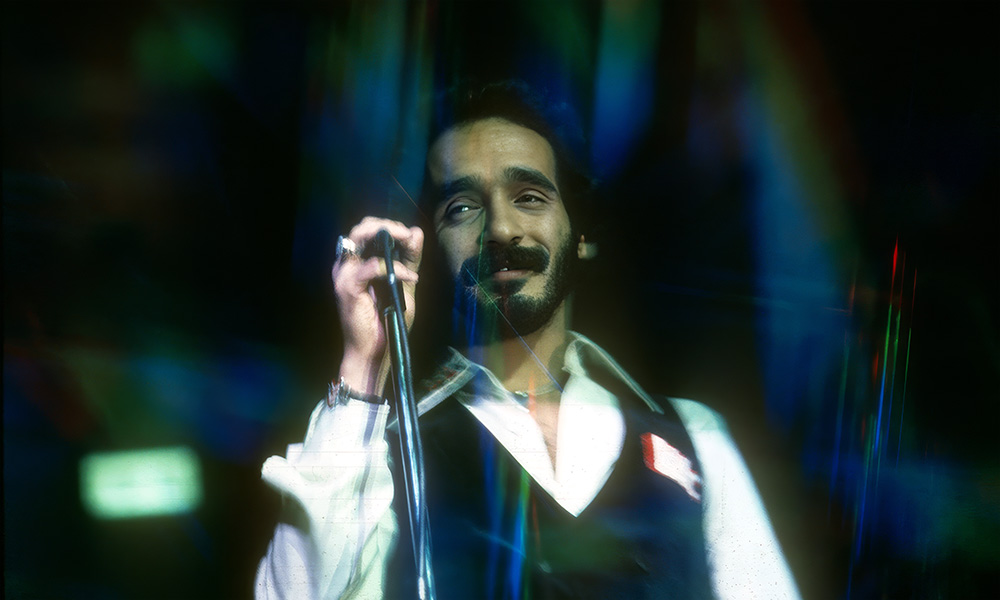
Craft Latino will reissue Willie Colón and Héctor Lavoe’s landmark 1969 album, Cosa Nuestra, on September 25, bringing one of salsa’s most influential recordings back to vinyl and CD. The new edition pays tribute to the late Willie Colón while celebrating an album that helped define the sound, image, and cultural force of New York salsa.
The vinyl edition has been mastered entirely in the analog domain and pressed on 180-gram vinyl. A limited Metallic Blue pressing, restricted to 300 copies, will also be available through Fania, either separately or bundled with a retro-logo T-shirt. A newly remastered version of the album is already available on digital platforms in standard and high-resolution audio.
Colón and Lavoe began working together in the mid-1960s after meeting at Fania Records. Colón was only 16, while Lavoe was 21. Their 1967 debut, El Malo, introduced an unusually compelling partnership: Colón’s raw, trombone-driven arrangements combined with Lavoe’s distinctive phrasing, streetwise personality, and exceptional command of the sonero tradition.
Following The Hustler and Guisando, the duo moved beyond the boogaloo sound that dominated much of the era and began developing the tougher, more sophisticated musical language that would become closely associated with salsa. Their fourth album, Cosa Nuestra—“Our Thing”—marked the moment when all the elements came together.

The album’s now-iconic cover reinforced the gangster imagery established on their earlier recordings, portraying Colón as a mobster preparing to dispose of a body near the Hudson River. The theatrical concept was more than a marketing device. It reflected the rebellious identity, urban atmosphere, and youthful attitude that made Colón and Lavoe central figures in the emerging Nuyorican music scene.
Produced by Jerry Masucci and overseen by Fania co-founder Johnny Pacheco, Cosa Nuestra introduced a revitalized ensemble featuring trombonist Eric Matos, timbalero Little Louie Romero, conguero Milton Cardona, bongó player José Mangual Jr., bassist Santi González, and pianist Professor Joe Torres.
Its songs offered vivid portraits of barrio life, betrayal, romantic disappointment, and everyday conflict. “Te conozco” focuses on a familiar neighbourhood freeloader, while “Tú no puedes conmigo” addresses the sting of a friend’s disloyalty. “Juana Peña” tells the story of a woman known for deceiving her lovers who eventually experiences heartbreak herself.
The bolero-son “Ausencia” gives Lavoe one of the album’s most emotionally resonant performances, expressing the anguish of a man unable to escape the memory of a failed relationship. In contrast, “Sonero mayor” celebrates improvisation and the art of soneo, one of Lavoe’s defining gifts.
The album’s greatest commercial success came with “Ché ché colé,” inspired by an African children’s game. Blending African and Caribbean rhythmic traditions, the infectious recording reached an international audience, helped propel Colón and Lavoe to stardom, and contributed to Cosa Nuestra becoming their first gold-selling album in the United States.
More than five decades later, Cosa Nuestra remains a cornerstone of salsa. Its combination of musical sophistication, Afro-Caribbean roots, urban storytelling, and unmistakable New York attitude established a model that shaped the genre throughout the 1970s. This reissue offers longtime admirers and new listeners an opportunity to rediscover the album in a format worthy of its enduring historical importance. Pre-Order Now!
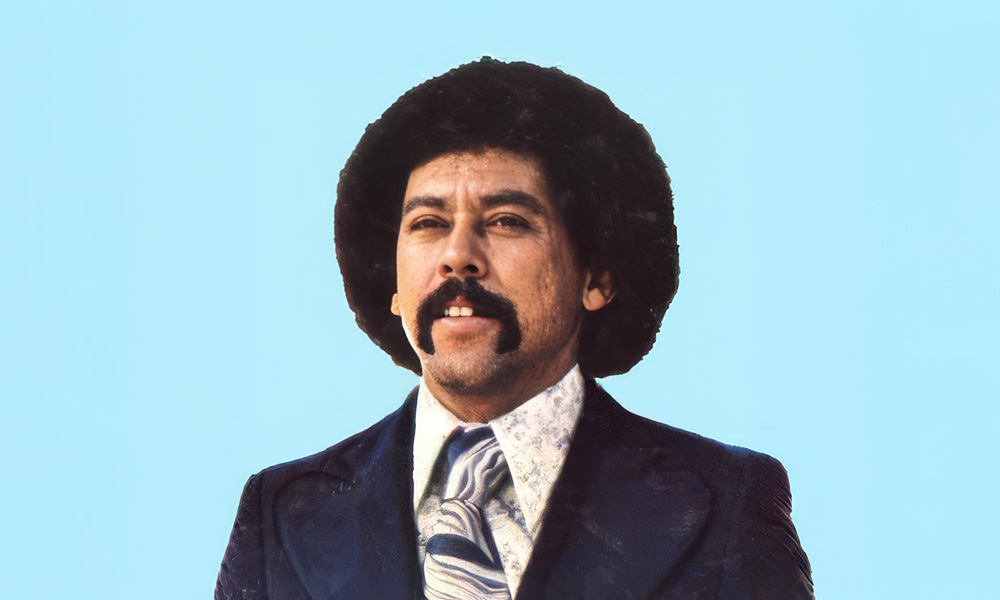
Craft Latino is celebrating the legacy of Puerto Rican singer and composer Chamaco Ramírez with the first vinyl reissue of Alive and Kicking, his acclaimed 1979 solo debut. Originally released by Inca Records and unavailable on vinyl for more than 45 years, the album will return on September 18, 2026, in conjunction with the beginning of Hispanic Heritage Month.
Although Alive and Kicking was Ramírez’s only album as a solo artist, the nine-song recording remains a powerful demonstration of his talents as a sonero, songwriter and bandleader. The album includes enduring favourites such as “San Agustín,” “Adivínalo” and “Así son Bongó,” supported by an exceptional ensemble of musicians from the New York salsa scene.
The new 180-gram pressing was produced using an all-analog process. Dave Polster and Clint Holley of Well Made Music cut the lacquers directly from the original master tapes, preserving the energy and clarity of Ramírez’s voice and the album’s richly arranged instrumentation. A limited-edition Rumba Amarilla pressing, restricted to 300 copies, will also be available through Fania, either separately or as part of a bundle with a collectible Inca Records T-shirt. The newly remastered album is already available digitally in standard and high-resolution audio.

Born in Puerto Rico in 1941, Ramírez emerged as one of salsa’s most admired improvisational singers. He was only 16 when he joined Tommy Olivencia y Su Orquesta as co-lead vocalist alongside Paquito Guzmán. During his 13 years with the orchestra, Ramírez appeared on eight albums and developed a reputation for his command of the sonero tradition and his ability to create spontaneous verses.
Ramírez also performed with the Alegre All Stars and Kako y Su Orquesta before leaving Olivencia’s band in 1976 and relocating to New York. Three years later, he recorded Alive and Kicking for Inca Records, a Fania subsidiary. The album was produced by Cuban pianist and arranger Javier Vázquez, widely recognized for his association with La Sonora Matancera.
The program opens with “San Agustín,” a memorable son montuno composed by Catalino “Tite” Curet Alonso. The song pays tribute to the working-class San Agustín community in San Juan’s Puerta de Tierra district. Ramírez then turns toward New York’s urban rumba tradition with an updated version of Cuban percussionist Justi Barreto’s “Rumba moderna.”
Among the album’s most popular selections is Ramírez’s own “Adivínalo,” an upbeat composition whose spirited delivery contrasts with its controversial references to drug use. “Así son Bongó,” written by Cuban composer Joseíto Fernández, is another highlight. Its story of an incarcerated man mourning a forgotten romance is transformed by Ramírez and the orchestra into an energetic guaguancó designed for dancers.
The album’s formidable personnel includes trumpeter Alfredo “Chocolate” Armenteros, bassist Elpidio Vázquez Jr., percussionist and vocalist Jorge Maldonado, saxophonists Manolín González and Mario Rivera, and percussionists Alberto Valdés, Edgar López and Mike Collazo. Adalberto Santiago and Tito Allen strengthen the coro, while producer Javier Vázquez also contributes on piano.
The memorable cover, designed by Ron Levine, depicts Ramírez emerging from a coffin into a beam of sunlight—a visual interpretation of the title that later acquired tragic significance. Ramírez was killed by gun violence in 1983 at the age of 41.
More than four decades later, Alive and Kicking remains a vital salsa recording and a lasting testament to Chamaco Ramírez’s commanding voice, improvisational brilliance and enduring artistic legacy. Pre-Order Now.


-

 25 Most Read Posts13 years ago
Juan García-Herreros “Snow Owl” – Normas
-

 25 Most Read Posts14 years ago
Edy Martínez, the Music Architect Behind the Piano
-

 25 Most Read Posts16 years ago
Raphael Cruz Reaffirms His Commitment To Latin Jazz!
-

 25 Most Read Posts11 years ago
Rubén Blades con Roberto Delgado & Orquesta: Son de Panamá