
News
Cal Tjader’s 1976 Fusion Tour-de-Force “Amazonas” Returns to Vinyl


The long out-of-print album was cut (AAA) from its original tapes, pressed on 180-gram vinyl at RTI, and features arrangements by George Duke, with an all-star lineup of Brazilian talent, including producer Airto Moreira
Los Angeles, CA (May 28, 2025)—Craft Recordings and Jazz Dispensary are gearing up for summer with the first-ever vinyl reissue of Amazonas—the 1976 fusion album from influential vibraphonist Cal Tjader. Bridging the gap between California and Rio de Janeiro, this innovative LP pairs the jazz star with top talent from Brazil (including producer Airto Moreira, flutist Hermeto Pascoal, and trombonist Raul de Souza) and features arrangements by legendary musician, singer-songwriter, and producer George Duke. The result is a spectacular blend of joyful melodies, funky basslines, and space-age synths, as heard in tracks like “Mindoro,” “Amazonas,” and “Corine.”
Returning to vinyl for the first time in five decades as part of Jazz Dispensary’s Top Shelf reissue series on July 25, Amazonas was cut (AAA) from its original tapes by Kevin Gray at Cohearent Audio and pressed on 180-gram vinyl at RTI. Rounding out the package is a stylish tip-on jacket replicating the album’s classic cover art. Click here to pre-order/stream today.

Perhaps the most influential Latin bandleader of non-Latin descent, vibraphonist Cal Tjader (1925–1982) integrated Afro-Caribbean rhythms, bop, and a variety of other influences to create a sound that was fresh, modern, and utterly unique. Raised in the Bay Area, Tjader began his career as a drummer, playing alongside the likes of Dave Brubeck before breaking out on his own as a leader. By the mid-’50s, Tjader was primarily focused on the vibraphone and, with his own quintet, had established himself in the hugely popular mambo scene. Significant success followed in the ’60s with a string of popular and stylistically varied albums for Verve Records, including Several Shades of Jade (1963), Soul Sauce (1964), Soul Bird: Whiffenpoof (1965), and The Prophet (1968). In addition to exploring sounds from around the globe, Tjader was also broadening his circle of collaborators, including such luminaries as Chick Corea, Eddie Palmieri, Stan Getz, Kenny Burrell, and Willie Bobo.
By the turn of the ’70s, as Tjader returned to his original label, Fantasy Records, his ever-evolving style was significantly influenced by the burgeoning fusion scene. While this period is often overshadowed by Tjader’s earlier works, his sonic voyages during this time were among his most creative, as he experimented with electronic instrumentation, funkified rhythms, and even elements of rock music. Amazonas, released in 1976, stands as the pinnacle of this era.
Recorded at Wally Heider’s storied Los Angeles studio in the summer of ’75, Amazonas featured an incredible collective of talent. At the helm was Brazilian percussionist and composer Airto Moreira, who served as producer. A key player in the fusion scene, Moreira was fresh off high-profile stints with Miles Davis, Return to Forever, and Weather Report, and had released several bestselling jazz titles under his own name.
Arranging the album was singer-songwriter, musician, and producer George Duke—another sonic shapeshifter who, in a testament to his versatility, was also splitting time between Frank Zappa’s Mothers of Invention and Cannonball Adderley’s band. While Duke’s complex arrangements (and moments of synth-driven flair, under the pseudonym “Dawilli Gonga”) brought a spirited funk to the tracks, Moreira oversaw an ensemble of rising Brazilian stars, including Egberto Gismonti (keyboards), Robertinho Silva (percussion), Hermeto Pascoal (flute), and Raul de Souza (trombone)—all of whom would become legends in their own right.
Tjader, who alternates between the vibraphone and marimba, leads the group through a refreshingly dynamic selection of tracks, including “Mindoro” (co-written with Pascoal); the João Donato-penned “Amazonas;” and “Noa Noa” by the great Sérgio Mendes. The highly collaborative session also features selections by Moreira (“Cahuenga” and “Xibaba”), Duke (the smooth-as-silk “Corine”), and prolific session musician David Amaro (“Flying”), who performs guitar on the album.
Over the years, Amazonas has become a highly respected title in Tjader’s catalog as well as the fusion canon. In a retrospective, AllMusic hailed, “Tjader los[es] himself in the complex mix of Afro-Brazilian rhythms, American funk, and ’70s-era electronics, integrating his own identity for the sake of the ensemble.” In his EchoLocator newsletter, veteran music journalist Tom Moon wrote, “Amazonas…is on my shortlist of albums that transcend genre categories so completely as to define an entire zone of creativity… It stands among his most ambitious and fully realized projects overall, envisioning fusion as a basis for elastic, sometimes frenetic interactivity.”
Click here to stream/pre-order Amazonas.
Tracklist (vinyl)
Side A: 1. Amazonas; 2. Xibaba; 3. Mindoro; 4. Flying.
Side B: 1. Corine; 2. Noa Noa; 3. Tamanco No Samba; 4. Cahuenga.
About Jazz Dispensary
Jazz Dispensary is a homegrown label celebrating mind-expanding, high-grade selections drawn from the finest original sources of funk, jazz, and all the areas they intersect. With knowledgeable sound sommeliers as guides, Jazz Dispensary brings deep catalog gems to the table, offering bespoke selections to match every mood and inspire an elevated conversation. A funky good time, a mystic journey, a powerful inspiration, Jazz Dispensary has the medicine that will spark things off. One hit and you’re hooked!
About Craft Recordings
Craft Recordings is home to one of the largest and most essential collections of master recordings and compositions in the world. Its storied repertoire includes landmark releases from icons such as Celia Cruz, Creedence Clearwater Revival, Isaac Hayes, John Coltrane, John Lee Hooker, Joan Baez, Joan Sebastian, Little Richard, Miles Davis, R.E.M., and Traveling Wilburys. Plus, the catalog recordings of celebrated contemporary acts including A Day to Remember, Alison Krauss, Daddy Yankee, Evanescence, Nine Inch Nails, Taking Back Sunday, and Violent Femmes, to name just a few. Renowned imprints with catalogs issued under the Craft banner include Fania, Fantasy, Fearless, HITCO, Musart, Nitro, Panart, Prestige, Riverside, Rounder, Specialty, Stax, Vanguard, Varèse Sarabande, Vee-Jay and Victory, among many others. Craft creates thoughtfully curated packages, with a meticulous devotion to quality and a commitment to preservation— ensuring that these recordings endure for new generations to discover. Craft is also home to the Billie Holiday and Tammy Wynette estates which preserve and protect their respective names, likeness, and music through day-to-day legacy management of these cultural trailblazers.
Craft Recordings is the catalog label team for Concord. For more info, visit CraftRecordings.com.



The Vince Guaraldi Trio’s A Charlie Brown Christmas has been certified six times platinum by the Recording Industry Association of America, representing six million album sales and streaming equivalents in the United States. According to Craft Recordings, that distinction makes the 1965 soundtrack the best-selling jazz album of all time. The news follows two anniversaries celebrated in 2025, when Charles M. Schulz’s Peanuts comic strip turned 75 and the animated Christmas special marked 60 years since its television debut.
Craft celebrated the milestone with a series of 2026 vinyl reissues, from an all-analogue pressing cut from the original master tapes to a limited-edition LP with snowflakes floating inside. At the heart of each edition is a piano trio recording that introduced generations of television viewers to jazz, often before they knew what to call the music they were hearing.

How Vince Guaraldi gave Peanuts its sound
Guaraldi’s association with Charlie Brown began in 1964, when producer Lee Mendelson was filming A Boy Named Charlie Brown, a documentary about Schulz and his comic strip. To write the score, Mendelson turned to Guaraldi, a Bay Area pianist whose composition “Cast Your Fate to the Wind” had earned him a Grammy. The documentary never aired, but Mendelson remembered the score. When he began work on A Charlie Brown Christmas the following year, he called Guaraldi back.
The half-hour special premiered on December 9, 1965, drawing nearly half of the American television audience that evening. It went on to win Emmy and Peabody awards and became an annual holiday tradition. Guaraldi continued composing for Peanuts specials until his death in 1976.
With bassist Fred Marshall and drummer Jerry Granelli among the musicians who took part in the sessions, Guaraldi found a distinct rhythm for each scene. The insistent left-hand piano figure of “Linus and Lucy” set the children dancing at their Christmas pageant rehearsal. On “Skating,” descending piano phrases suggested the movement of skaters on the ice. For listeners drawn to the Brazilian side of Guaraldi’s playing, “Christmas Is Coming” holds a particular pleasure in the way its syncopated melody rides a light bossa nova pulse.
Guaraldi also brought his West Coast jazz sensibility to “O Tannenbaum,” “What Child Is This,” and “Hark, the Herald Angels Sing.” One of his own melodies became a holiday standard alongside them. “Christmas Time Is Here” appears twice on the LP. The instrumental closes side one, and the children’s voices open side two, giving words to the wistful tune Guaraldi has just played. The album has since entered the Grammy Hall of Fame and the Library of Congress’s National Recording Registry.
Inside the 2026 vinyl editions
The reissue series began on August 28 with Walmart’s exclusive Silver Emerald pressing. Two more editions followed on September 25. Barnes & Noble issued a picture disc reproducing the original cover artwork, while Target’s Iridescent Snow LP included an exclusive poster. Urban Outfitters released a Sapphire pressing on October 2. The Walmart, Target and Urban Outfitters editions each came in a blue foil jacket.
On October 9, Craft issued a 180-gram edition in its Original Jazz Classics series. Mastering engineer Matthew Lutthans cut the lacquers directly from the original master tapes using an all-analogue process. Quality Record Pressings pressed the LP, which came in a Stoughton tip-on jacket. Craft also brought back the zoetrope LP first issued for the 2025 holiday season after earlier pressings sold out several times.
The series concluded on November 6 with its smallest pressing, a liquid-filled “Snow Globe” LP with snowflakes suspended inside the record. Craft offered all editions for pre-order, and the entire 300-copy run of the “Snow Globe” sold out. The repressed zoetrope edition is available through Craft Recordings. Click here to see all editions and order.
Tracklist
Side 1
- O Tannenbaum
- What Child Is This
- My Little Drum
- Linus & Lucy
- Christmas Time Is Here (instrumental)
Side 2
- Christmas Time Is Here (vocal)
- Skating
- Hark, The Herald Angels Sing
- Christmas Is Coming
- Für Elise
- The Christmas Song
- Greensleeves
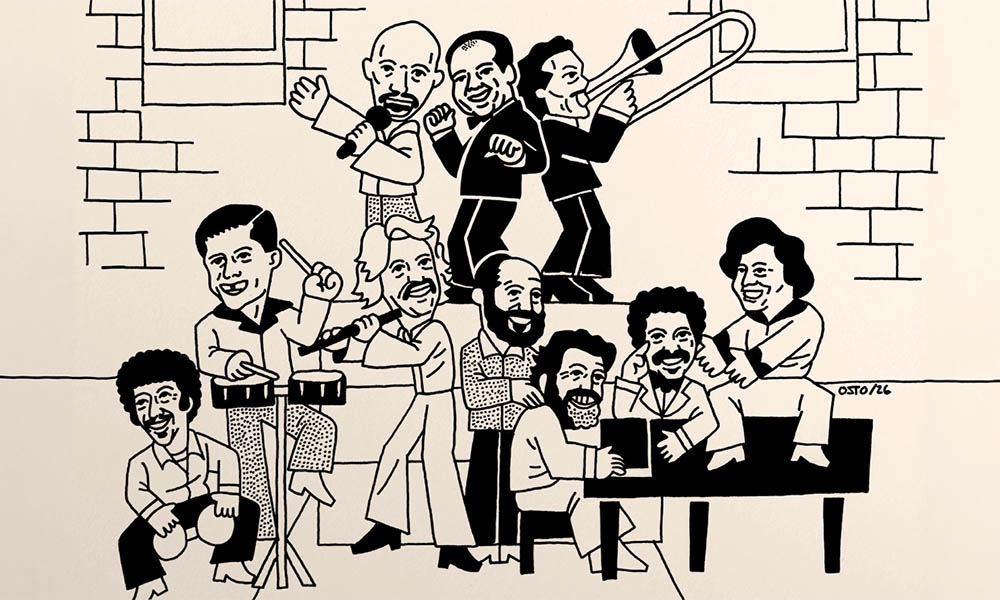
Craft Latino celebrates the label Al Santiago founded in 1956 with a 12-track collection featuring Johnny Pacheco, Charlie and Eddie Palmieri, Pete Rodríguez and the Alegre All Stars.
When Johnny Pacheco played flute in Charlie Palmieri’s band, the two musicians shared a bandstand in New York’s charanga scene. Within a few years, Pacheco was leading a successful charanga of his own, and Palmieri was directing an ensemble that brought them back together. The man behind both ventures was Al Santiago. Seventy years after he founded Alegre Records, Craft Latino revisits those connections on Alegre Records: The Latin Sound of New York (1961–1975), released November 13 on vinyl and digital platforms.
Al Santiago finds his calling
A New Yorker who took over his father’s orchestra before his twentieth birthday, Santiago came to the record business with a bandleader’s ear. He opened a record store and founded Alegre in 1956. One of his earliest successes came in 1960, when he released Johnny Pacheco y Su Charanga, Vol. 1. The young flautist’s feel for mambo found an enthusiastic audience and helped establish the label. His “El Güiro de Macorina” opens the anniversary collection.
The Palmieri brothers follow Pacheco on the record, each with a different idea of what a New York dance band could sound like. On Charlie’s 1973 recording of “La Hija de Lola,” vocalist Vitín Avilés carries the story. Eddie’s “Lázaro y Su Micrófono,” recorded a decade earlier for his second album with La Perfecta, puts the band’s trombones out front. Eddie recorded his first three albums for Alegre, developing a sound that would help shape salsa.

From the boogaloo dance floor to the jazz repertoire
By the mid-1960s, New York musicians were bringing American rhythm and blues into conversation with Afro-Caribbean dance rhythms. Pete Rodríguez’s “I Like It Like That,” which opens the second side of the vinyl edition, became one of boogaloo’s defining hits. Pianist Ricardo Ray and singer Bobby Cruz offer another perspective on the same moment with “Lookie Lookie,” their 1966 single.
Elsewhere, individual voices give the collection much of its character. Chivirico Dávila sings with Orlando Marín’s orchestra on “La Casa,” while Rudy Calzano joins vibraphonist Louie Ramírez on “El Títere.” The closing pair of selections takes listeners from the jazz repertoire to Puerto Rican plena. Roberto Roena and his Megatones reinterpret Paul Desmond’s “Take Five.” Mon Rivera follows with “Monina,” drawing on plena’s role as el periódico cantado, the sung newspaper that turned the events of everyday life into song.
The Alegre All Stars and the road to Fania
Inspired by Panart’s Cuban jam sessions, Santiago formed the Alegre All Stars in 1961. With Charlie Palmieri as musical director, the ensemble drew on a circle that included Pacheco, trombonist Barry Rogers, singer Chamaco Ramírez and timbalero Kako Bastar. “Se Acabó Lo Que Se Daba” and “Tema Alegre” capture the musicians’ playful exchanges. Pacheco later drew on that experience when he formed the Fania All Stars.
Alegre passed to Branston Music in 1966 and to Fania Records in 1975, the year represented here by Ángel Canales’ “Lejos de Ti.” Santiago went on to produce recordings by Celia Cruz, Willie Colón and Mongo Santamaría. The anthology brings his own contribution into focus. He gave musicians room to develop distinctive bands and, in the Alegre All Stars, a place to hear what happened when they played together.
The single-record vinyl edition includes new liner notes in English and Spanish by producer and composer Bobby Marín. Puerto Rican artist Jose Ostolaza, known as Ostomatic, created the hand-drawn cover illustration.
Available for $26.00 (1-LP) on Craft Recordings’ online store.
Tracklist
Side A
- Johnny Pacheco – El Güiro de Macorina
- Charlie Palmieri – La Hija de Lola
- Eddie Palmieri y Su Conjunto La Perfecta – Lázaro y Su Micrófono
- Angel Canales – Lejos de Ti
- Louie Ramirez – El Títere
- Ricardo Ray – Lookie Lookie
Side B
- Pete Rodríguez – I Like It Like That
- Alegre All Stars – Se Acabó Lo Que Se Daba
- Orlando Marín & His Orchestra – La Casa
- Alegre All Stars – Tema Alegre
- Roberto Roena y Sus Megatones – Take Five
- Mon Rivera – Monina

Brazilian mandolin virtuoso Hamilton de Holanda opens a new creative chapter with Nova, a wide-ranging album that brings the traditions of Brazilian instrumental music into conversation with contemporary jazz and sounds from Africa, India, the Caribbean and the Middle East.
Released by Sony Music Brasil on May 20, 2026, the 14-track, 56-minute recording was produced by de Holanda and Marcos Portinari. Recorded in different parts of the world, Nova draws inspiration from the people, places and musical encounters that have marked de Holanda’s extensive travels.
At the heart of the album is the Hamilton de Holanda Trio: de Holanda on 10-string mandolin, Salomão Soares on keyboards and synthesizers, and Thiago “Big” Rabello on drums. Their six-year musical partnership gives the project its central identity, balancing rhythmic precision, melodic freedom and intuitive ensemble interaction.
The trio is joined by an impressive international cast that includes Indian sitarist Anoushka Shankar, French-Lebanese trumpeter Ibrahim Maalouf, Cuban percussionist and vocalist Pedrito Martínez, Angolan singer-songwriter Paulo Flores and Brazilian percussion legend Paulinho da Costa. Other guests include Pedro Martins, Michael Pipoquinha, Pretinho da Serrinha, Mestra Zélia do Prato and Larissa Umaytá.

Opening with “Nova Alvorada,” the album imagines a new dawn rooted in African and Afro-Brazilian traditions. Pedrito Martínez contributes vocals and percussion, Michael Pipoquinha adds electric bass, and singers Tatiana Parra, Vanessa Moreno and Dani Gurgel form the supporting chorus.
Elsewhere, “Som de Baile” channels the energy of Brazilian dance bands, drawing upon the spirit of Banda Black Rio, Jorge Ben Jor and Gilberto Gil. “Frio Lá Fora,” composed during a bitterly cold stay in New York, features Maalouf and Pretinho da Serrinha, while “Pras Crianças” combines an ijexá-based foundation with the resonant sound of Shankar’s sitar. “Luanda (Unidos)” creates a bridge to Angolan semba through the voice and text of Paulo Flores.
Among the album’s most reflective compositions is “Mono no Aware,” which has received an official visualizer. Written by de Holanda and Soares, its title comes from a Japanese expression describing an awareness of life’s impermanence—and the realization that beauty becomes more meaningful because it is temporary.
Recorded at producer and engineer Mario Caldato Jr.’s Los Angeles studio, the piece features Paulinho da Costa on percussion and Pedro Martins on guitar alongside the trio. The gathering connects three generations of Brazilian musicians in a performance that is sophisticated, spacious and emotionally restrained.
The visualizer complements the composition’s contemplative character through imagery evoking delicacy, transition and constant transformation. Rather than presenting a literal storyline, it creates an intimate visual environment in which the music’s mixture of quiet joy and underlying sadness can unfold. The official visualizer is available through Hamilton de Holanda’s YouTube channel.
Now entering his sixth decade, de Holanda remains one of Brazilian instrumental music’s most innovative figures. By expanding the traditional eight-string bandolim into a 10-string instrument, he developed a broader harmonic and melodic vocabulary that has allowed him to move naturally among choro, samba, jazz and global musical traditions.
With Nova, that spirit of invention is guided by gratitude, generosity and an enduring belief in music’s ability to connect people. Tradition and experimentation are not treated as opposites; they become complementary parts of a living musical language.
As de Holanda explains, creating original music with such an extraordinary community of artists is his way of affirming that, regardless of the world’s uncertainties, “the music will continue.”
Nova — Complete Track Listing
1. Nova Alvorada — Hamilton de Holanda
2. Presente pra Sempre — Hamilton de Holanda
3. Nasci — Hamilton de Holanda
4. Som de Baile — Hamilton de Holanda
5. Mono no Aware — Hamilton de Holanda and Salomão Soares
6. Frio Lá Fora — Hamilton de Holanda and Gabriel de Holanda
7. Carrossel — Hamilton de Holanda and Gabriel de Holanda
8. Pras Crianças — Hamilton de Holanda
9. Luanda (Unidos) — Hamilton de Holanda
10. Por Essa Eu Não Esperava — Hamilton de Holanda and Gabriel de Holanda
11. Forrozin de Mestra Zélia — Hamilton de Holanda
12. Choro Fado — Hamilton de Holanda
13. Sol da Noite — Hamilton de Holanda
14. Até Amanhã — Hamilton de Holanda and Salomão Soares
Album Credits
Hamilton de Holanda Trio
Hamilton de Holanda: 10-string mandolin
Salomão Soares: keyboards, synthesizers and Moog
Thiago “Big” Rabello: drums and percussion
Guest Artists and Additional Musicians
“Nova Alvorada”
Pedrito Martínez — percussion and vocals
Michael Pipoquinha — bass
Tatiana Parra — backing vocals
Vanessa Moreno — backing vocals
Dani Gurgel — backing vocals
“Nasci”
Eduardo Neves — tenor saxophone
Aquiles Moraes — trumpet
Rafael Rocha — trombone and horn arrangement
“Som de Baile”
Eduardo Neves — tenor saxophone
Aquiles Moraes — trumpet
Rafael Rocha — trombone and horn arrangement
Larissa Umaytá — percussion
“Mono no Aware”
Paulinho da Costa — percussion
Pedro Martins — guitar
“Frio Lá Fora”
Ibrahim Maalouf — trumpet
Pretinho da Serrinha — percussion
“Pras Crianças”
Anoushka Shankar — sitar
Leander Motta — moringa percussion
“Luanda (Unidos)”
Paulo Flores — voice and spoken text
“Forrozin de Mestra Zélia”
Mestra Zélia do Prato — voice
Production
Producers: Hamilton de Holanda and Marcos Portinari
Executive producer and editing engineer: Marcos Portinari
Assistant producer: Fellipe Cabral
Mixing: Thiago Rabello and Da Pá Virada
Mastering: André Dias
Assistant engineer: Vitor Nery
Photography: Nando Chagas
Label: Sony Music Brasil
Release date: May 20, 2026
Format: Digital album
Duration: Approximately 56 minutes

-

 25 Most Read Posts13 years ago
Juan García-Herreros “Snow Owl” – Normas
-

 25 Most Read Posts15 years ago
Edy Martínez, the Music Architect Behind the Piano
-

 25 Most Read Posts16 years ago
Raphael Cruz Reaffirms His Commitment To Latin Jazz!
-

 25 Most Read Posts11 years ago
Rubén Blades con Roberto Delgado & Orquesta: Son de Panamá