
News
“BEATrio”: New Album by Béla Fleck, Edmar Castañeda & Antonio Sánchez

BEATtrio (“Beat trio”), the all-star band featuring Béla Fleck, virtuoso Colombian harpist Edmar Castañeda and sensational Mexican jazz drummer Antonio Sánchez, will release its self-titled debut album on May 16 (Béla Fleck Productions / Thirty Tigers). Tour dates in US, Japan, South Korea, Canada, Europe & UK, will include the Big Ears Festival, Telluride, Seoul Jazz Festival, North Sea Jazz, Pori Jazz, Winnipeg Jazz Festival and more.
Over the past half-century, Béla Fleck has exploded the parameters of the banjo, taking his staggering musicality to inspired blends of bluegrass, fusion, folk, jazz, classical, global music and more. In the process he’s won 19 Grammy Awards and rightfully earned a reputation as one of our most brilliant instrumentalists.
To be sure, his new all-star trio with harpist Edmar Castañeda and drummer Antonio Sánchez is nothing less, featuring instrumentation that might safely be called uncommon.
This new trio, Fleck says, “kind of reminds me of the early days of the Flecktones, when audiences would go, ‘How is this supposed to work?’” For both groups, it turns out, the answer is: extraordinarily well.
![Béla Fleck, Edmar Castañeda & Antonio Sánchez Trio [Photo Credit: Shervin Lainez]](https://i0.wp.com/latinjazznet.com/wp-content/uploads/2025/03/Bela-Fleck-Edmar-Castaneda-Antonio-Sanchez-Trio-740.jpg?resize=740%2C740&ssl=1)
It helps that Castañeda and Sánchez are two of the most gifted musicians of their generation. The harpist hails from Bogotá, Colombia, and has led his own bands in addition to sharing projects with such masters as Hiromi, Paquito D’Rivera and Grégoire Maret. Other collaborators have included Paco de Lucía, Wynton Marsalis, Sting, Marcus Miller and John Scofield. For the hit Disney film Encanto, he acted as a music consultant and contributed to the soundtrack. “His musical vision is so invigorating,” wrote NPR, whose hit web series Tiny Desk Concert showcased Castañeda in 2010.
Five-time Grammy-winner Sánchez grew up in Mexico City and built a reputation as one of the great jazz drummers through his work with guitarist Pat Metheny. He’s also been a visionary bandleader, helming progressive groups like Bad Hombre, and collaborated with Chick Corea, Gary Burton, Charlie Haden, Michael Brecker and other giants. His Golden Globe-nominated drum-set score for Alejandro González Iñárritu’s 2014 film Birdman earned him renown far outside the jazz world.
Fleck recalls first hearing about Castañeda nearly a decade ago, from the Flecktone and bass legend Victor Wooten. Castañeda “was one of those guys that seemed like he fit in the extended Flecktones family — weirdos like us,” Fleck says with a laugh. The two eventually met, in Nashville, and began jamming, including one auspicious session in New York’s Riverside Park. When Fleck was invited to perform at the acclaimed Big Ears Festival in 2019, he thought, why not play duo with Edmar?
The set, held at a cathedral in Knoxville, Tenn., was a rousing success. (It was also recorded by NPR’s Jazz Night in America and remains available online.) “What I hadn’t realized,” Fleck says, “is what a great performer Edmar is, as well as being a great musician. The Big Ears audience that hadn’t heard him before were basically blown away, flipping out. At the end of this set, people were going ballistic.”
Enter Sánchez, whom Fleck had met in India, when the two performed as part of a tribute to tabla master Alla Rakha, organized by his son and protégé Zakir Hussain. “Meeting him through Zakir,” Fleck says, “it was like we were already friends before we even played any music. When we started working together, it was like we’d already worked together for 20 years. We played on one or two tunes at that show, and I thought, ‘Wow, this might be one of the easiest drummers I’ve ever played with. Everything he does shapes the music so well. And the time is so perfect; I don’t have to worry about it. He takes care of it. And I feel free.’
“I connect with people over rhythm,” Fleck continues. “That’s probably the thing that turns on my motor the most. And so, playing with Edmar, I’m surprised that I can play bluegrass. The rhythm is so compelling between Antonio and Edmar that I can roll, like on a bluegrass song, and have it sound perfectly natural.”
Adds Sánchez, “Béla’s playing, as we all know, is incredibly virtuosic. But his rhythm is impeccable. I’ve developed a deep sense of subdivisions and time, so interacting with a player of Béla’s caliber was effortless.”
In 2018, Dave Matthews invited Fleck to open for him in Mexico, so the banjoist asked Sánchez to join him in a fairly loose, spontaneous banjo/bass/drums set. Sánchez returned the favor, asking Fleck to record duets with him in New York for a new project, which got Fleck thinking about Edmar. “So we recorded the duo a bit,” Fleck recalls, “and then Edmar came and we set up and just jammed and recorded.” The interplay, the communication, the camaraderie — all of it was astounding. “That session,” Fleck explains, “was the impetus to say, ‘Hey, let’s figure out how to really do this.’”
Despite the surplus of virtuosity among the trio, assembling a repertoire came with challenges. Certain melodic and harmonic moves that are manageable on banjo definitely are not on the harp, and vice versa, so Fleck and Castañeda wrote together in addition to bringing in their own pieces. Sánchez contributed original music too, testing out the viability of his work using composition software before showing it to his bandmates. In the end, the composition process was intensely collaborative, ensuring that each piece offered an orchestral scope despite the unusual instrumentation.
In September 2024, during a weeklong run at the Blue Note Jazz Club in Greenwich Village, the trio was able to fully explore this music, ironing out the kinks and pushing the improvisational rapport to new heights. “Each night at the Blue Note felt like an adventure,” says Castañeda, “and it was special to see the audience experience the music’s evolution.”
Or as Fleck puts it, “We were hanging on for dear life. Things were going right, things were going wrong — everything was happening.”
By the run’s end, the trio had locked into a sort of telepathy, as well as a system for covering all the necessary musical ground. “I play the groove with my left hand with Antonio,” says Castañeda, “while at the same time I play melodies and harmonies with my right hand and with Béla — a very fun challenge that makes a unique and powerful trio.”
“Edmar has quite a bit of responsibility in this particular case,” Sánchez adds, “because he functions as the harmony and the bass.” Indeed, Castañeda sends the bottom frequencies of his harp through a proper bass rig onstage, so the low end is always present. The drummer goes on to call Castañeda “the glue between the banjo and the drums.”
By design, Fleck booked recording dates for the trio after the material had been played again and again in the Blue Note run — to avoid making one of those “apologetic jazz records,” he chuckles, “where you say, ‘God, don’t listen to the record — we’re so much better now.’”
The banjoist is looking forward to releasing these recordings, and to exploring more with the band live. “I think we could have some fun being out there on the festival circuit,” he says, “and doing this crazy band in some nice places.”
Fleck is also excited by the prospect of focusing again on a tight, jazz-leaning, improvisation-focused unit, after devoting so much of his career of late to classical and bluegrass projects, and to the duo he shares with his wife, Abigail Washburn.
“I’m not saying this will be the Flecktones,” says Fleck. “That is such a particular, unique thing. But there are similarities in the way it evolved very naturally, kind of falling in my lap without a big plan. I wasn’t trying to start a band when the Flecktones happened. But people just started showing up in my life who were very hard to ignore.”
Source: www.belafleck.com



Brazilian mandolin virtuoso Hamilton de Holanda opens a new creative chapter with Nova, a wide-ranging album that brings the traditions of Brazilian instrumental music into conversation with contemporary jazz and sounds from Africa, India, the Caribbean and the Middle East.
Released by Sony Music Brasil on May 20, 2026, the 14-track, 56-minute recording was produced by de Holanda and Marcos Portinari. Recorded in different parts of the world, Nova draws inspiration from the people, places and musical encounters that have marked de Holanda’s extensive travels.
At the heart of the album is the Hamilton de Holanda Trio: de Holanda on 10-string mandolin, Salomão Soares on keyboards and synthesizers, and Thiago “Big” Rabello on drums. Their six-year musical partnership gives the project its central identity, balancing rhythmic precision, melodic freedom and intuitive ensemble interaction.
The trio is joined by an impressive international cast that includes Indian sitarist Anoushka Shankar, French-Lebanese trumpeter Ibrahim Maalouf, Cuban percussionist and vocalist Pedrito Martínez, Angolan singer-songwriter Paulo Flores and Brazilian percussion legend Paulinho da Costa. Other guests include Pedro Martins, Michael Pipoquinha, Pretinho da Serrinha, Mestra Zélia do Prato and Larissa Umaytá.

Opening with “Nova Alvorada,” the album imagines a new dawn rooted in African and Afro-Brazilian traditions. Pedrito Martínez contributes vocals and percussion, Michael Pipoquinha adds electric bass, and singers Tatiana Parra, Vanessa Moreno and Dani Gurgel form the supporting chorus.
Elsewhere, “Som de Baile” channels the energy of Brazilian dance bands, drawing upon the spirit of Banda Black Rio, Jorge Ben Jor and Gilberto Gil. “Frio Lá Fora,” composed during a bitterly cold stay in New York, features Maalouf and Pretinho da Serrinha, while “Pras Crianças” combines an ijexá-based foundation with the resonant sound of Shankar’s sitar. “Luanda (Unidos)” creates a bridge to Angolan semba through the voice and text of Paulo Flores.
Among the album’s most reflective compositions is “Mono no Aware,” which has received an official visualizer. Written by de Holanda and Soares, its title comes from a Japanese expression describing an awareness of life’s impermanence—and the realization that beauty becomes more meaningful because it is temporary.
Recorded at producer and engineer Mario Caldato Jr.’s Los Angeles studio, the piece features Paulinho da Costa on percussion and Pedro Martins on guitar alongside the trio. The gathering connects three generations of Brazilian musicians in a performance that is sophisticated, spacious and emotionally restrained.
The visualizer complements the composition’s contemplative character through imagery evoking delicacy, transition and constant transformation. Rather than presenting a literal storyline, it creates an intimate visual environment in which the music’s mixture of quiet joy and underlying sadness can unfold. The official visualizer is available through Hamilton de Holanda’s YouTube channel.
Now entering his sixth decade, de Holanda remains one of Brazilian instrumental music’s most innovative figures. By expanding the traditional eight-string bandolim into a 10-string instrument, he developed a broader harmonic and melodic vocabulary that has allowed him to move naturally among choro, samba, jazz and global musical traditions.
With Nova, that spirit of invention is guided by gratitude, generosity and an enduring belief in music’s ability to connect people. Tradition and experimentation are not treated as opposites; they become complementary parts of a living musical language.
As de Holanda explains, creating original music with such an extraordinary community of artists is his way of affirming that, regardless of the world’s uncertainties, “the music will continue.”
Nova — Complete Track Listing
1. Nova Alvorada — Hamilton de Holanda
2. Presente pra Sempre — Hamilton de Holanda
3. Nasci — Hamilton de Holanda
4. Som de Baile — Hamilton de Holanda
5. Mono no Aware — Hamilton de Holanda and Salomão Soares
6. Frio Lá Fora — Hamilton de Holanda and Gabriel de Holanda
7. Carrossel — Hamilton de Holanda and Gabriel de Holanda
8. Pras Crianças — Hamilton de Holanda
9. Luanda (Unidos) — Hamilton de Holanda
10. Por Essa Eu Não Esperava — Hamilton de Holanda and Gabriel de Holanda
11. Forrozin de Mestra Zélia — Hamilton de Holanda
12. Choro Fado — Hamilton de Holanda
13. Sol da Noite — Hamilton de Holanda
14. Até Amanhã — Hamilton de Holanda and Salomão Soares
Album Credits
Hamilton de Holanda Trio
Hamilton de Holanda: 10-string mandolin
Salomão Soares: keyboards, synthesizers and Moog
Thiago “Big” Rabello: drums and percussion
Guest Artists and Additional Musicians
“Nova Alvorada”
Pedrito Martínez — percussion and vocals
Michael Pipoquinha — bass
Tatiana Parra — backing vocals
Vanessa Moreno — backing vocals
Dani Gurgel — backing vocals
“Nasci”
Eduardo Neves — tenor saxophone
Aquiles Moraes — trumpet
Rafael Rocha — trombone and horn arrangement
“Som de Baile”
Eduardo Neves — tenor saxophone
Aquiles Moraes — trumpet
Rafael Rocha — trombone and horn arrangement
Larissa Umaytá — percussion
“Mono no Aware”
Paulinho da Costa — percussion
Pedro Martins — guitar
“Frio Lá Fora”
Ibrahim Maalouf — trumpet
Pretinho da Serrinha — percussion
“Pras Crianças”
Anoushka Shankar — sitar
Leander Motta — moringa percussion
“Luanda (Unidos)”
Paulo Flores — voice and spoken text
“Forrozin de Mestra Zélia”
Mestra Zélia do Prato — voice
Production
Producers: Hamilton de Holanda and Marcos Portinari
Executive producer and editing engineer: Marcos Portinari
Assistant producer: Fellipe Cabral
Mixing: Thiago Rabello and Da Pá Virada
Mastering: André Dias
Assistant engineer: Vitor Nery
Photography: Nando Chagas
Label: Sony Music Brasil
Release date: May 20, 2026
Format: Digital album
Duration: Approximately 56 minutes
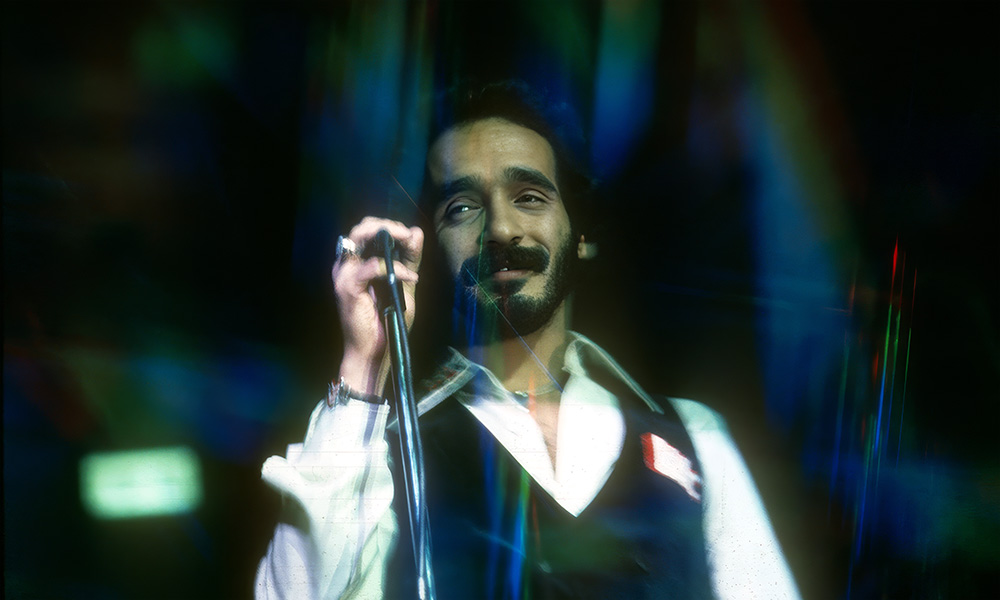
Craft Latino will reissue Willie Colón and Héctor Lavoe’s landmark 1969 album, Cosa Nuestra, on September 25, bringing one of salsa’s most influential recordings back to vinyl and CD. The new edition pays tribute to the late Willie Colón while celebrating an album that helped define the sound, image, and cultural force of New York salsa.
The vinyl edition has been mastered entirely in the analog domain and pressed on 180-gram vinyl. A limited Metallic Blue pressing, restricted to 300 copies, will also be available through Fania, either separately or bundled with a retro-logo T-shirt. A newly remastered version of the album is already available on digital platforms in standard and high-resolution audio.
Colón and Lavoe began working together in the mid-1960s after meeting at Fania Records. Colón was only 16, while Lavoe was 21. Their 1967 debut, El Malo, introduced an unusually compelling partnership: Colón’s raw, trombone-driven arrangements combined with Lavoe’s distinctive phrasing, streetwise personality, and exceptional command of the sonero tradition.
Following The Hustler and Guisando, the duo moved beyond the boogaloo sound that dominated much of the era and began developing the tougher, more sophisticated musical language that would become closely associated with salsa. Their fourth album, Cosa Nuestra—“Our Thing”—marked the moment when all the elements came together.

The album’s now-iconic cover reinforced the gangster imagery established on their earlier recordings, portraying Colón as a mobster preparing to dispose of a body near the Hudson River. The theatrical concept was more than a marketing device. It reflected the rebellious identity, urban atmosphere, and youthful attitude that made Colón and Lavoe central figures in the emerging Nuyorican music scene.
Produced by Jerry Masucci and overseen by Fania co-founder Johnny Pacheco, Cosa Nuestra introduced a revitalized ensemble featuring trombonist Eric Matos, timbalero Little Louie Romero, conguero Milton Cardona, bongó player José Mangual Jr., bassist Santi González, and pianist Professor Joe Torres.
Its songs offered vivid portraits of barrio life, betrayal, romantic disappointment, and everyday conflict. “Te conozco” focuses on a familiar neighbourhood freeloader, while “Tú no puedes conmigo” addresses the sting of a friend’s disloyalty. “Juana Peña” tells the story of a woman known for deceiving her lovers who eventually experiences heartbreak herself.
The bolero-son “Ausencia” gives Lavoe one of the album’s most emotionally resonant performances, expressing the anguish of a man unable to escape the memory of a failed relationship. In contrast, “Sonero mayor” celebrates improvisation and the art of soneo, one of Lavoe’s defining gifts.
The album’s greatest commercial success came with “Ché ché colé,” inspired by an African children’s game. Blending African and Caribbean rhythmic traditions, the infectious recording reached an international audience, helped propel Colón and Lavoe to stardom, and contributed to Cosa Nuestra becoming their first gold-selling album in the United States.
More than five decades later, Cosa Nuestra remains a cornerstone of salsa. Its combination of musical sophistication, Afro-Caribbean roots, urban storytelling, and unmistakable New York attitude established a model that shaped the genre throughout the 1970s. This reissue offers longtime admirers and new listeners an opportunity to rediscover the album in a format worthy of its enduring historical importance. Pre-Order Now!
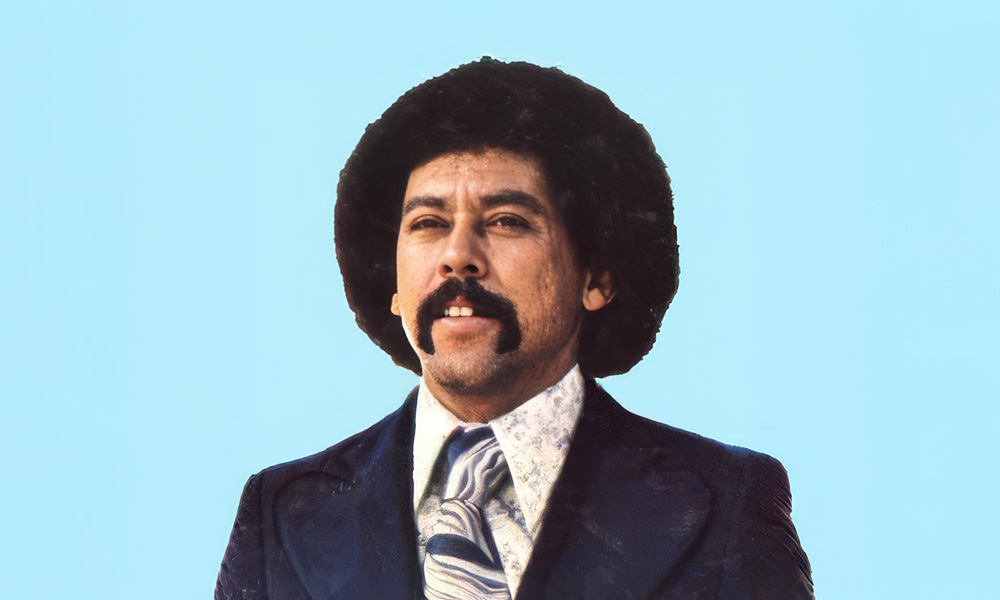
Craft Latino is celebrating the legacy of Puerto Rican singer and composer Chamaco Ramírez with the first vinyl reissue of Alive and Kicking, his acclaimed 1979 solo debut. Originally released by Inca Records and unavailable on vinyl for more than 45 years, the album will return on September 18, 2026, in conjunction with the beginning of Hispanic Heritage Month.
Although Alive and Kicking was Ramírez’s only album as a solo artist, the nine-song recording remains a powerful demonstration of his talents as a sonero, songwriter and bandleader. The album includes enduring favourites such as “San Agustín,” “Adivínalo” and “Así son Bongó,” supported by an exceptional ensemble of musicians from the New York salsa scene.
The new 180-gram pressing was produced using an all-analog process. Dave Polster and Clint Holley of Well Made Music cut the lacquers directly from the original master tapes, preserving the energy and clarity of Ramírez’s voice and the album’s richly arranged instrumentation. A limited-edition Rumba Amarilla pressing, restricted to 300 copies, will also be available through Fania, either separately or as part of a bundle with a collectible Inca Records T-shirt. The newly remastered album is already available digitally in standard and high-resolution audio.

Born in Puerto Rico in 1941, Ramírez emerged as one of salsa’s most admired improvisational singers. He was only 16 when he joined Tommy Olivencia y Su Orquesta as co-lead vocalist alongside Paquito Guzmán. During his 13 years with the orchestra, Ramírez appeared on eight albums and developed a reputation for his command of the sonero tradition and his ability to create spontaneous verses.
Ramírez also performed with the Alegre All Stars and Kako y Su Orquesta before leaving Olivencia’s band in 1976 and relocating to New York. Three years later, he recorded Alive and Kicking for Inca Records, a Fania subsidiary. The album was produced by Cuban pianist and arranger Javier Vázquez, widely recognized for his association with La Sonora Matancera.
The program opens with “San Agustín,” a memorable son montuno composed by Catalino “Tite” Curet Alonso. The song pays tribute to the working-class San Agustín community in San Juan’s Puerta de Tierra district. Ramírez then turns toward New York’s urban rumba tradition with an updated version of Cuban percussionist Justi Barreto’s “Rumba moderna.”
Among the album’s most popular selections is Ramírez’s own “Adivínalo,” an upbeat composition whose spirited delivery contrasts with its controversial references to drug use. “Así son Bongó,” written by Cuban composer Joseíto Fernández, is another highlight. Its story of an incarcerated man mourning a forgotten romance is transformed by Ramírez and the orchestra into an energetic guaguancó designed for dancers.
The album’s formidable personnel includes trumpeter Alfredo “Chocolate” Armenteros, bassist Elpidio Vázquez Jr., percussionist and vocalist Jorge Maldonado, saxophonists Manolín González and Mario Rivera, and percussionists Alberto Valdés, Edgar López and Mike Collazo. Adalberto Santiago and Tito Allen strengthen the coro, while producer Javier Vázquez also contributes on piano.
The memorable cover, designed by Ron Levine, depicts Ramírez emerging from a coffin into a beam of sunlight—a visual interpretation of the title that later acquired tragic significance. Ramírez was killed by gun violence in 1983 at the age of 41.
More than four decades later, Alive and Kicking remains a vital salsa recording and a lasting testament to Chamaco Ramírez’s commanding voice, improvisational brilliance and enduring artistic legacy. Pre-Order Now.


-

 25 Most Read Posts13 years ago
Juan García-Herreros “Snow Owl” – Normas
-

 25 Most Read Posts14 years ago
Edy Martínez, the Music Architect Behind the Piano
-

 25 Most Read Posts16 years ago
Raphael Cruz Reaffirms His Commitment To Latin Jazz!
-

 25 Most Read Posts11 years ago
Rubén Blades con Roberto Delgado & Orquesta: Son de Panamá