
Interviews
One on One with Danilo Pérez: 10th Panama Jazz Festival

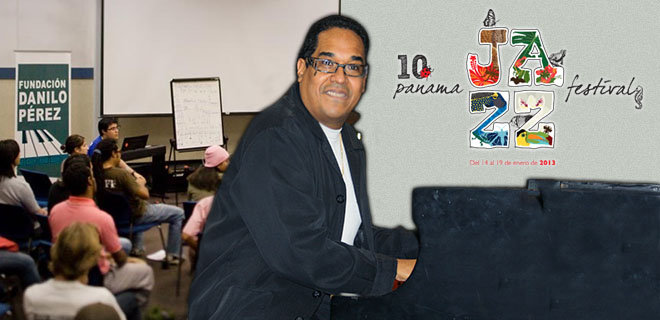
The Panama Jazz Festival was founded in September 2003 by Panamanian Grammy-winning pianist Danilo Pérez. A Fulbright Scholar, UNICEF Goodwill Ambassador, Cultural Ambassador of Panama, and educator, founder of the Berklee Global Jazz Institute at Berklee College of Music (MA, USA)
Perez founded the festival with the mission of bettering the lives of people through shared musical experiences as listeners, on stage and in the classrooms. Perez’s stated vision for the event is that “By offering performances and educational activities of the highest order, as well as practical, hands on training in the music and entertainment business, the Panama Jazz Festival aims to inspire and educate while providing tools and opportunities to build a better future for individuals and their communities.”
As such, and while the Festival annually offers a rich program of concerts by leading international jazz musicians, the emphasis is on music education. It has become the largest music education event in the region. The Panama Jazz Festival provides a week of master classes by some of the finest institutions in the field, including Berklee College of Music, New England Conservatory, the Golandsky Piano Institute, and the Conservatory of Music of Puerto Rico. The event has also become a center for auditions for admissions and scholarships for the participating institutions. Other institutions that have participated in the festival include the Thelonious Monk Institute of Jazz, the University of Massachusetts Amherst, the Sienna Jazz Foundation, and the Paris Conservatory.
In just ten years, the festival has become a cultural tourism attraction that has already enticed to Panama more than 150,000 people from all over the world. The Festival has also announced more than 2,000,000 dollars in scholarships and more than 10,000 students, many of them international, have taken advantage of the Festival’s educational programs. The festival supports the year-round educational programs of Danilo Perez Foundation, which brings art and music to children from extremely poor communities in the Republic of Panama. (Taken from Wikipedia)
Interview by Danilo Navas
Recently, I had the opportunity of interviewing Danilo Pérez about the Panama Jazz Festival, which will be celebrating its 10th anniversary next January 2013.
LJN: Hello Danilo, thank you for giving us the opportunity of talking to you about the Panama Jazz Festival. I’m sure Latin Jazz Network visitors will appreciate your commentaries and will be very interested in learning more about this great event that takes place annually in January, in the capital city of your country, Panama. 10 years ago, you created and organized the first edition of the Panama Jazz Festival, a huge and challenging project in all aspects. When you think back about those times what comes to mind?
DP: When I think back on the time I organized the first festival I think about my life then, how I was about to have my first daughter while delivering another baby, the festival itself! I was 10 years younger, and I could handle 2 babies!
LJN: Are you surprised at the exponential growing of the festival over this 10-year period? Had you actually envisioned the festival becoming such an important event, not only for Panama, but for Latin America and US?
DP: I am surprised of the growth of the festival and I am mostly surprised by the panamanian people, young and old, rich and poor. How they have learned to appreciate jazz at the deepest level. We have a deep connection with jazz historically and emotionally. Many great jazz musicians have panamanian roots: Randy Weston, Eric Dolphy, Luis Rusell (Musical Director for Louis Armstrong Band), Sonny White (pianist for Billy Holiday), Billy Cobham…
LJN: As we say in baseball jargon, you have all the bases covered: the festival offers performances at the top level, with paid and free concerts; it’s also a venue for new talent to participate and shine; it does promote tourism and commerce, as Panama becomes the Jazz Capital of Latin America during the festival; and then one of the most important components of this event is the educational one, split in two aspects: it exposes the public to great music and artists from many places and diverse styles, and it does offer previously non-existing opportunities to students who don’t have the means to pay for their education.
Let’s talk first about the humongous task of financing the festival, involving the government, private agencies and private businesses. How could you organize all these sectors? How hard it was to sell the idea of the festival?
DP: The idea is hard to sell. We have a lot of support from many entities, but it still does not cover the cost of the festival. The growth of the sponsorship has not been growing in direct relationship with the public growth and that is a challenge every single year. It takes our team 12 months to organize the sponsorship sector.
LJN: Volunteers are surely a very important element in the organization and execution of the festival. Can you expand on this topic?
DP: Volunteers are very important, we have managed thousands of volunteers since 2003. Volunteers grow into staff members and many times into Coordinators who manage an entire department. We have volunteers that are 14 years old up to people on their 70’s. From musicians to psychologists to engineers. National and international.
LJN: The Fundación Danilo Pérez plays a pivotal role in all aspects of the festival. What’s exactly the role of the foundation? How does it fuse with the festival?
DP: The Foundation receives financial support from the festival and with that support works all year long taking children out of extreme poverty through musical programs all over Panama.

10th Panama Jazz Festival – January 14-19, 2013
LJN: Let’s talk about the artists who participate as performers and clinicians. How can you manage to get together so many talented musicians and educators? What’s the process you follow to select those ones who participate?
DP: I travel to most jazz festivals in the world and teach all year long, so most of the musicians that come to the festival are my friends, or I know them professionally. The same with educators. I direct the Berklee Global Jazz Institute at Berklee College of Music and before that I taught at the New England Conservatory for 15 years. In total I have been teaching for about 25 years, so I have access to great educators.
LJN: The educational component of the festival is key to the success of it. For the public in general, who participates as an active audience, and for the students who participate in workshops, performances and competing for sholarships. How does it all work in conjunction? How do you raise the sensibility of the people? How do you make them appreciate Jazz as a form of art? or as a popular artistic expression?
And on the other hand, How does it work for students who want to participate? What are the steps to follow? Obviously you work together with many institutions within Panama, and outside as well.
DP: The educational component of the festival is key. From the audience to the artist itself, we care about interconnecting all parts into a whole experience. All artists teach a master class and meet thousands students from all over Latin America. At the same time we spend ten years educating the panamanian people about the relationship between jazz and Panama by including the biographies of panamanian musicians that actively participated in the history of jazz. This educational component is included in our publicity strategy, so it is massive. We have had street vendors commenting us about jazz bands they are listening at the outdoor concert, their interaction on stage, they can comment on the timbre on the instruments, and explain in a very detailed way why they like it.
On another hand, all music students and professionals from all over the world are invited to participate of the master classes. The festival functions as a music education convention that has all kinds of classes from 9am to 4pm every day of the week of the festival. Students register through Blockbuster in Panama or tuboleto.com or just show up at the registration desk at the City of Knowledge on Monday morning (on the first day of the festival), pay a small fee and enjoy a week of master classes by the artists themselves and students and teachers form the Berklee Global Jazz Institute and Berklee College of Music, New England Conservatory, Conservatory of Puerto Rico , Golandsky Piano Institute among others.
LJN: On a more personal note, how do you combine your professional career, your role as an artist with your roles as an educator, festival organizer, cultural ambassador of your country? How can you manage to wear so many hats at the same time?
DP: I happen to be surrounded by beautiful, intelligent, workaholic women who help me manage all my projects, heading up the list is my wife Patricia Zárate, who not only directs the festival, but plays saxophone and homeschool our 3 children.
LJN: Thank you Danilo. Thank you for taking some of your precious time to answer to our questions. And congratulations for ten years of hard work and commitment to the festival.
DP: Thanks to you and Latin Jazz Network for allowing me to address your visitors.
About Danilo Pérez
Grammy award winner Danilo Pérez is among the most influential and dynamic musicians of our time. In just over a decade, his distinctive blend of Pan-American jazz (covering the music of the Americas, folkloric and world music) has attracted critical acclaim and loyal audiences. Danilo’s abundant talents and joyous enthusiasm make his concerts both memorable and inspiring. Whether leading his own ensembles or touring with renowned jazz masters (Wayne Shorter, Roy Haynes, Steve Lacy), Danilo is making a decidedly fresh imprint on contemporary music, guided, as always, by his love for jazz. He has led his own groups since the early ‘90s, and as bandleader has earned three Grammy® nominations for his ebullient and innovative recordings. Born in Panama in 1965, Danilo started his musical studies at just three years of age with his father, a bandleader and singer. By age 10, he was studying the European classical piano repertoire at the National Conservatory in Panama. After receiving his bachelor’s degree in electronics, he moved to the United States to enroll at Indiana University of Pennsylvania and, after changing his major to music, transferred to the prestigious Berklee College of Music. Currently, Perez serves as Artistic Director of the Panama Jazz Festival, Artistic Advisor of the innovative Mellon Jazz Up Close series at the Kimmel Center in Philadelphia, and Artistic Director of the Berklee Global Jazz Institute. Read Full Bio
About the Panama Jazz Festival
http://en.wikipedia.org/wiki/Panama_Jazz_Festival
The Panama Jazz Festival was founded in September 2003 by Panamanian Grammy-winning pianist Danilo Pérez.
A Fulbright Scholar, UNICEF Goodwill Ambassador, Cultural Ambassador of Panama, and educator, founder of the Berklee Global Jazz Institute at Berklee College of Music, (MA, USA), Perez founded the festival with the mission of bettering the lives of people through shared musical experiences as listeners, on stage and in the classrooms. Perez’s stated vision for the event is that “By offering performances and educational activities of the highest order, as well as practical, hands on training in the music and entertainment business, the Panama Jazz Festival aims to inspire and educate while providing tools and opportunities to build a better future for individuals and their communities.”
As such, and while the Festival annually offers a rich program of concerts by leading international jazz musicians, the emphasis is on music education. It has become the largest music education event in the region.
The Panama Jazz Festival provides a week of master classes by some of the finest institutions in the field, including Berklee College of Music, New England Conservatory, the Golandsky Piano Institute, and the Conservatory of Music of Puerto Rico. The event has also become a center for auditions for admissions and scholarships for the participating institutions.
Other institutions that have participated in the festival include the Thelonious Monk Institute of Jazz, the University of Massachusetts Amherst, the Sienna Jazz Foundation, and the Paris Conservatory.
In just ten years, the festival has become a cultural tourism attraction that has already enticed to Panama more than 150,000 people from all over the world. The Festival has also announced more than 2,000,000 dollars in scholarships and more than 10,000 students, many of them international, have taken advantage of the Festival’s educational programs.
Some of the artists featured in the festival include The Wayne Shorter Quartet, Chucho Valdés Quartet, John Patitucci, Joe Lovano, Rubén Blades, Randy Weston, Kenny Barron, Nnenna Freelon, Lizz Wright, Jack DeJohnette, Stanley Jordan, Billy Cobham, and Ellis Marsalis, Jr.
The festival supports the year-round educational programs of Danilo Perez Foundation, which brings art and music to children from extremely poor communities in the Republic of Panama.
Clinics and Special Programs
An important part of the festival is music education, and all invited artists teach master classes in the “Music Clinics”, where students from all parts of Latin America and the world come together to learn from the international masters of jazz. Among the international artists that have given lectures are Wayne Shorter, Chucho Valdez, Jack De Johnette, John Patitucci, Joe Lovano, Randy Weston, Brian Blade, Kurt Rosenwinkel, Nnenna Freelon, Kenny Barron, Marco Pignataro, Eddie Gomez, Regina Carter, Steve Turre, Stanley Jordan, Janis Siegel, David Sanchez, Charlie Hunter, Tia Fuller, and many more.
The Panama Jazz Festival has also offered master classes on Panamanian Folklore, dance, classical music (with renowned national and international musicians and the best groups from the New England Conservatory), literature, production and engineering (thanks to the Berklee College of Music Production and Engineering Department), and many other subjects.
Auditions and Scholarships
Each year, the festival invites prestigious institutions to audition and recruit students from all over Latin America and the world. At present time the Panama Jazz Festival is the largest recruiting space in Latin America for admissions and scholarships for some of the best music schools in the Americas including Berklee College of Music, New England Conservatory, Conservatory of Music of Puerto Rico, Golandsky Piano Institute at Princeton University.
Related Links
Panama Jazz Festival Marks 10th Anniversary in 2013
Panama Jazz Festival Official Website
Panama Jazz Festival YouTube Channel
Photographs – Clínicas/Workshops – Panama Jazz Festival


Introduction: The Rhythmic Map of José Guzmán
For guitarist and composer José Guzmán, the distance between the academic rigours of a Doctoral degree and the street-level pulse of a Puerto Rican bomba circle is non-existent. Born and raised in Ponce, Guzmán has spent his career translating the “hard 90-degree pivot” from rock-and-roll to jazz into a sophisticated, percussion-driven language. His latest project with The Afro-Caribbean Jazz Collective, Cortadito, serves as a vibrant proof of concept for his “drum-first” philosophy—an approach that demands the composer master the hand drums before ever picking up the pen.
In Cortadito, Guzmán departs from the traditional jazz quintet by daringly removing the drumset entirely. By centring the barril and congas, he creates a sonic space that smells of the Caribbean sea and feels like the cobblestones of Old San Juan. It is an intimate, unfiltered snapshot of heritage that balances the intensity of son montuno and songo with the tender, lived-in emotions of the bolero.
In this candid conversation, Guzmán opens up about the “flying without a net” energy of the Collective, his responsibility to the legacy of masters like Rafael Cortijo and William Cepeda and why he believes that to truly play Latin Jazz, you must first learn to speak through the skin of the drum.

“The title Cortadito is a snapshot of my heritage and upbringing… I was flooded with memories of the mountain view from my home in Ponce, the cobblestones in Old San Juan…”
On Cortadito (2025 JGB Music)
Cortadito has clearly resonated with critics and audiences alike—what was the central artistic vision behind this album, and how does it build on or depart from Fiesta at Caroga?
Fiesta at Caroga was a great way to find my artistic voice, while Cortadito has refined my vision. After Fiesta at Caroga, I felt that I needed to connect the audience with my Puerto Rican roots. I composed tunes that put the Puerto Rican folkloric rhythms of bomba front and center (“Holande Pa Uste” and “Witches Dance”) while expanding on our repertoire with son montunos, cha cha, boleros, and songo.
The title Cortadito evokes something intimate yet culturally specific. What does the title represent for you musically and personally?
It’s a snapshot of my heritage and upbringing. As I wrote the music for the album, I was flooded with memories of the mountain view from my home in Ponce, the cobblestones in Old San Juan, and the smell of the Caribbean sea. The imagery of the empty coffee mug in the album cover, the intensity of the music, and the gentleness of boleros are staples on the island.
Can you walk us through your compositional process for this album? Did the pieces emerge from rhythmic concepts, harmonic ideas, or lived experiences?
A mixture of all of the above. I purchased several percussion instruments (congas, Puerto Rican barril, etc) and dove headfirst into learning the lineage of the drum and playing all the patterns that I write music for. If I can’t play it, I won’t write it. It was common to hear teachers at the Puerto Rico Conservatory say, “to play Latin jazz, you gotta play the hand drums,” and that is common to hear in interviews of the masters as well. Some ideas came to me as I practiced my basic patterns and became useful with the help of practice tools such as Agustin Espina’s Latin Percussion Grooves or the mobile app PercussionTutor.
As for the lived experiences portion, it’s very personal storytelling. The idea for Roberto Cantoral’s “El Reloj” came to me as I took care of my father before he passed away, and I always dedicate the song to my audience because we all share that feeling of losing a loved one. Others, such as “A Sunny Kind of Day” and “Orchard Downs,” are based on my day-to-day life experiences in Puerto Rico and the state of Illinois.
How did you approach balancing Afro-Caribbean rhythmic traditions with modern jazz language on this recording?
While I was writing, I felt a strong responsibility to write melodies that swing with the clave, the drum patterns, and, at times, the dancer. The harmonic canvas tends to reveal itself afterwards. My writing process varies; at times I’ll have a melody come to mind, record a voice memo (or more), and then I’ll find the rhythm that fits. Other times, I’ll play the drums and let the pattern lead me to a new melody.
Were there particular tracks on Cortadito that presented unique challenges or breakthroughs during recording?
Recording is always tedious because, unlike playing live music and the “flying without a net” feeling that comes with it, you can easily get stuck in your head, striving to create a good product. I am lucky enough to say that I surrounded myself with very positive friends who were also enthusiastic in the process. “El Volcán” and “Holandé Pa Usté” were challenging but fun to record.

“I am building on the foundation laid out by Rafael Cortijo’s Time Machine and William Cepeda… pushing the boundaries of what was Latin jazz at the moment of publication.”
On Musical Identity & Heritage
Your music reflects a deep connection to Puerto Rican rhythms. How do you translate traditional forms into a contemporary jazz context without losing their essence?
As a fan of salsa music and traditional folklore, I wanted to keep the dance aspect of the Afro-Caribbean rhythmic traditions and adorn it with melodies that percolate from the hand drums. Even the decision of not having a drumset in the recording was made in an effort for the percussion section to shine and pop out. In live shows, I’ll have drummers set up a timbale/drumset similar to what Samuel Formell (Los Van Van drummer and leader) uses, but I still prefer the timbales with a kick drum for the studio.
During the barril solo on “Witches Dance”, I actually had someone come into the studio and dance a traditional bomba improvisation for the drummer to play to. Having that solo kept the spirit of the dancer, which was really important for me.
Growing up in Ponce, Puerto Rico, what early musical influences shaped your identity as a guitarist and composer?
My influences are a wide spectrum of genres. I grew up listening to Fania Records, Puerto Rican folklore artists, and the boleros of El Trio Los Panchos, but in my teenage years, I learned guitar by playing classic rock and mid 90’s trending rock bands. By then, I found myself playing in several rock bands with my neighbors, writing music and playing shows. It wasn’t until I was 18 years old when I discovered Al Di Meola, Paco de Lucia, and John McLaughlin’s Saturday Night in San Francisco that I pivoted to jazz, and that pivot was a hard 90 degrees into the genre.
How do you see your work contributing to the broader narrative of Afro-Caribbean jazz today?
I am building on the foundation laid out by Rafael Cortijo’s Time Machine (1973) and William Cepeda’s Puerto Rican jazz discography (1992 onwards), to name a few. Both artists focused on bringing the rhythms of bomba and plena into the jazz realm, pushing the boundaries of what was Latin jazz at the moment of publication.

“The beautiful (and intimidating) part about the Collective is the rotating cast of musicians… in 2025 alone, we collaborated with over 40 musicians across 8 states.”
On Bandleading & The Afro-Caribbean Jazz Collective
As the leader of The Afro-Caribbean Jazz Collective, what qualities do you prioritize when assembling and directing your ensemble?
If we think of it as a pyramid, sight reading is at the top, followed by improvisational skills (especially over clave), and well-rounded musicianship. This is because we don’t get a chance to rehearse as much as I’d like to, so it’s crucial to get the melody and form with as little or no rehearsal time. Currently, I have a core group that travels with me, and I’ll pick up musicians who live in the area we are visiting. I gravitate towards players who play or have played in salsa bands, and the results are always fun!
Your group has developed a strong identity over several albums—how has the band evolved since its inception?
The beautiful (and intimidating) part about the Collective is the rotating cast of musicians who are well-versed in Latin jazz while also exposing strong musicians to playing clave music. This serves as a place for players to grow, as well as my own growth by receiving feedback from Victor Garcia, Roy McGrath, Tito Carillo, Zach Rich, and Matt Shevitz. This is also due to the size of the group and the hectic schedule of musicians with families and other priorities. In 2025 alone, the Collective collaborated with over 40 musicians while playing across 8 states.
What does collaboration look like within the Collective? Do your band members contribute to arrangements or compositional ideas?
It’s always evolving. When I started the ensemble, I would have people bring in arrangements. The last track in Cortadito (“El Volcán”) was written and arranged by tenor sax player Brian Stark. Brian is a strong composer and arranger for a big band, and I fell in love with the tune. Trombonist Ben Carrasquillo is the arranger of our EP version of Nat King Cole’s “Love for Sale”. Several musicians have asked me about writing for the ensemble, and I always welcome it, but I won’t pressure folks to write. Ever since the release of Fiesta at Caroga, I usually consult ideas with members, bring the arrangements to a show, and members will contribute with ideas to enhance the melodic weight or sections.

On Education & Artistic Development
You’ve pursued extensive academic training—from the Puerto Rico Conservatory to a DMA in Jazz Guitar Performance. How has your formal education shaped your artistic voice?
It was very important in my development since my early years as a guitarist were a combination of playing my favorite songs at home and jamming songs with my neighbor, no music theory or formal lessons. The Conservatory is where I developed the foundation for playing jazz and my first exposure to listening to classical music (chamber and orchestral) on a daily basis. Southern Illinois University in Carbondale exposed me to writing atonal music, taught me to analyze it, and provided me with my first opportunity to write for a big band every couple of months. At the University of Illinois Urbana-Champaign, I got to write a lot of songs and arrangements for a robust instrumentation guided by a faculty whose legacy is found in albums by Arturo Sandoval, Woody Herman, and many more. The latter also taught me the value of research in academic settings, and I am interested in adding the Afro-Puerto Rican voice to that conversation as well.
As someone deeply rooted in both performance and composition, how do you balance intellectual rigour with emotional expression in your music?
Writing music is similar to writing stories; there’s a narrative that makes an audience feel. For me, there has to be a connection between ideas and not just juxtaposing melodic ideas to create sections. If I can sing the melody while playing clave or drums, then I move forward. My favorite tool when composing is the eraser, especially when overcomplicating melodic statements or when I get a bad case of writer’s block.
On Career & Looking Ahead
You’ve worked across genres—from jazz to chamber music to rock—and collaborated with diverse artists. How have these experiences influenced your approach as a bandleader?
It exposes me to different approaches of ensemble performing, ways of conducting an ensemble, addressing the audience, learning about the music industry from peers, and exchanging arranging techniques that would’ve been “learned” from a book. These projects also influenced my thought process when composing, creating a setlist, and deciding what to do (or not) in the bandstand, and it allows me to get comfortable being on stage.
Looking ahead, what new directions or projects are you most excited to explore with The Afro-Caribbean Jazz Collective?
The success of Cortadito has given me the confidence to continue to write a lot of music. I’m excited to go back into the studio in the summer to record new music that is exclusively focused on bomba rhythms alongside Chicago-based bomba ensemble Colectivo Sayba. I’m also writing new tunes for a separate recording session in a similar vibe to Cortadito.

Brazilian pianist, composer and producer Ricardo Bacelar opens up about Maracanós, his ambitious new collaboration with legendary percussionist Airto Moreira and special guest Flora Purim.
In this exclusive interview, Bacelar reflects on how the album emerged organically during the filming of a documentary at Jasmin Music’s studio in Fortaleza (the capital of Ceará, a state located in northeastern Brazil), where creativity flowed through improvisation, friendship and artistic trust. He discusses building what he calls “a film without images,” blending Brazilian rhythms, orchestral textures, electronics and spontaneous musical interaction.
Bacelar also speaks about Airto’s enduring legacy, Flora’s spiritual vocal presence, the symbolism behind the album title, and why protecting artistic freedom in an algorithm-driven music industry remains essential.
“Art needs risk, surprise, contradiction, silence and emotional density,” Bacelar says.
Read our full conversation on Maracanós, one of the most adventurous Brazilian jazz releases of the year.

“Airto approaches music with the spirit of a child discovering sound for the first time.”
Maracanós brings you together with the legendary Airto Moreira, one of the most influential Brazilian musicians in jazz history. How did this collaboration first come about, and what made this the right moment for you both to create an album together?
This collaboration emerged very naturally through our friendship and through the documentary project we were developing around Airto and Flora at Jasmin Studio. During the filming sessions, we spent many hours together inside the studio environment, talking about music, listening to sounds, and experimenting with rhythms and textures. At a certain point, the creative process itself became stronger than the original plan. We realized there was an album being born there organically.
I believe the timing was special because we were all completely open artistically. Airto carries an extraordinary musical freedom, and I was interested in creating a sonic universe where Brazilian music, improvisation, cinematic atmospheres, and contemporary production could coexist without limitations. Maracanós became the result of that encounter.
You’ve described the project as being born organically during the filming of the documentary. Can you take us back to those sessions at Jasmin Studio in Fortaleza and describe the atmosphere that led to the creation of Maracanós?
The atmosphere was extremely creative and immersive. Airto and Flora stayed with us in Fortaleza for an extended period, and the studio became almost like a living organism. Music happened all day long. Sometimes ideas would emerge during rehearsals, sometimes during conversations, and many times while the cameras were rolling.
Jasmin Studio is inside my home, so there is a very human and intimate dimension to the recordings. We were surrounded by Brazilian light, food, conversations, nature, silence, and deep musical exchange. That emotional proximity created trust, and trust creates freedom. I think you can hear that spirit throughout the album.
The album appears to embrace freedom, spontaneity and experimentation, qualities that have defined Airto’s career for decades. How did you balance structured composition with improvisational freedom during the recording process?
For me, composition and improvisation are not opposites. They complement each other. Some pieces began with harmonic structures or rhythmic ideas I brought to the sessions, but once the musicians entered the emotional space of the music, we allowed the compositions to breathe.
Airto has an incredible instinct. He transforms rhythm into narrative. So I tried to create an environment where spontaneity could happen without losing the identity of the pieces. We recorded many moments in a very open way, preserving imperfections, interactions and
emotional reactions. That human unpredictability became part of the language of the album.
Your production approach combines acoustic instruments, synthesizers, percussion and strings in a very cinematic way. What was your sonic vision for Maracanós, and how did you build that immersive soundscape?
I wanted the album to feel almost like a film without images. A sonic landscape where Brazilian rhythms could coexist with orchestral textures, electronic atmospheres, improvisation and silence.
The production was built very carefully inside Jasmin Studio, which is designed for immersive audio and deep acoustic detail. We used analog and digital elements together, combining percussion layers, piano, synthesizers, strings and spatial textures, almost like painting with sound.
I’m very interested in emotional depth and timbre. Sometimes a texture can say more than a melody. The immersive aspect of the production became fundamental in creating this sensation of movement, memory and atmosphere.

“Flora transforms emotion into sound very naturally… Airto approaches music with the spirit of a child discovering sound for the first time… They have an almost telepathic connection.”
Flora Purim makes a special appearance on “Voo da Tarde.” What did she bring to that track creatively, and what was it like having both Flora and Airto together in the studio?
Flora brings something very unique. She transforms emotion into sound very naturally. Her voice carries spirituality, freedom and an unmistakable musical identity. On “Voo da Tarde,” she added a dreamlike dimension that elevated the piece emotionally.
Having Flora and Airto together in the studio was deeply inspiring. They have lived and created music together for more than six decades, and there is an almost telepathic connection between them. Sometimes they communicated musically with just a glance. Witnessing that inside the studio was very moving.
Airto is receiving the prestigious National Endowment for the Arts honour this year. Did working so closely with him give you new insights into why his influence on jazz and Brazilian music remains so profound?
Absolutely. What impressed me most was not only his musical genius but his permanent curiosity. Airto approaches music with the spirit of a child discovering sound for the first time. He is always searching, always experimenting.
His influence goes far beyond percussion. He expanded the vocabulary of rhythm inside jazz and brought Brazilian musical identity into a truly global conversation without losing authenticity. Working closely with him made me understand even more deeply how innovation and freedom are connected in his artistic philosophy.
The title Maracanós is intriguing. What is the story behind the album’s title, and what does it symbolize artistically or culturally?
The title was created by Airto Moreira himself, and I love the poetic and symbolic dimension it carries. Maracanós combines the words “maraca”, “Maracanã”, and the pronoun “nós”, which means “we” in Portuguese. The title, therefore, brings together rhythm, Brazilian identity, collectivity and movement at the same time.
There is something deeply Brazilian in the sound of the word, but also something open and universal. It evokes percussion, nature, birds, popular energy, community and encounter. I think this perfectly reflects the spirit of the album, a musical encounter built collectively through friendship, freedom, improvisation and cultural exchange.

“Maracanós represents friendship, freedom, improvisation and cultural exchange.”
The Kalimera String Quartet appears on two tracks with arrangements by Liduíno Pitombeira. Why was it important to incorporate strings into this project, and how did they expand the album’s musical vocabulary?
The strings introduced another emotional layer to the album. I wanted certain moments to have greater harmonic depth and cinematic expansion, almost like opening a new emotional horizon inside the music.
Liduíno Pitombeira created arrangements with enormous sensitivity. He understands both classical language and Brazilian musical phrasing, which allowed the quartet to interact organically with percussion, improvisation and the rhythmic complexity of the album.
Your label, Jasmin Music, has become an important platform for Brazilian artists across multiple generations. How does Maracanós reflect your broader vision as a producer and label founder?
Maracanós reflects very clearly what I believe Jasmin Music represents: artistic freedom, sonic excellence, cultural identity and creative risk.
I’m interested in building projects that preserve musical depth and emotional truth. We live in a time where music is often reduced to speed and algorithms. Jasmin was created to protect artistic identity and long-form musical experiences. This album embodies that philosophy completely.
Airto mentioned using his voice throughout the sessions in spontaneous ways when he wasn’t playing percussion. Were there moments during the recording process that surprised you creatively?
Many moments surprised me. Airto uses his voice almost as an extension of rhythm and emotion. Sometimes he would suddenly begin vocalizing textures or rhythmic ideas while listening to playback, and those moments became part of the atmosphere of the recordings.
There was a constant sense of discovery in the studio. Some of the most beautiful moments happened unexpectedly.
The album moves away from commercial formulas and embraces artistic risk. In today’s music industry, where algorithms often shape listening habits, how important is it for you to protect creative freedom?
For me, creative freedom is essential. Music cannot exist only to satisfy algorithms or consumption patterns. Art needs risk, surprise, contradiction, silence and emotional density.
I believe audiences still deeply desire authenticity. Perhaps the industry sometimes underestimates listeners. My commitment is to create music that has identity and emotional permanence, even if it follows a more difficult commercial path.

“Music still has the power to create emotional bridges between cultures, generations and human experiences.”
The upcoming documentary directed by Jom Tob Azulay adds another dimension to this project. What can audiences expect from the film that they may not hear on the album itself?
The film reveals the human and emotional dimension behind the music. Audiences will witness the creative process in real time: conversations, rehearsals, improvisations, memories, tensions, humor, affection and the intimacy of artistic creation.
It is not only a documentary about music. It is also about friendship, artistic legacy, exile, Brazil, spirituality and the passage of time.
You’ve collaborated with artists such as Gilberto Gil, Roberto Menescal, Toninho Horta and many others. Where does Maracanós fit within your artistic evolution?
I see Maracanós as one of the most mature and free projects of my career. It synthesizes many things I’ve explored throughout the years: Brazilian harmony, cinematic language, sophisticated production, improvisation and emotional storytelling.
At the same time, it opened new creative doors. Working closely with Airto and Flora expanded my perception of spontaneity and musical freedom.
The album cover artwork by Fernando França reflects a symbolic connection between Brazil and Africa. How important was visual storytelling in shaping the identity of this release?
Visual identity is extremely important to me. I see albums as complete artistic objects, not only collections of songs.
Fernando França created images that connect mythology, ancestry, Brazil, Africa and spirituality in a very powerful way. The artwork reflects the same emotional and symbolic layers that exist in the music itself.
Finally, what do you hope listeners around the world take away from Maracanós, especially those discovering your music, or perhaps even Airto and Flora’s legacy, for the first time?
I hope listeners feel an emotional connection and freedom. I hope the album invites people into a deeper listening experience, where music becomes atmosphere, memory and emotion.
For younger audiences discovering Airto and Flora, I hope Maracanós reveals the timelessness of their artistic vision. For those discovering my work through this project, I hope they perceive the commitment to authenticity, sonic beauty and Brazilian musical identity.
I believe music still has the power to create emotional bridges between cultures, generations and human experiences. That is ultimately what Maracanós represents for me.

Amsterdam-based Cuban-born vocalist Estrella Acosta continues to expand her artistic horizons with Caminos – A Latin American Landscape, a vibrant and far-reaching recording with her ensemble Esquina 25. A Latin Grammy nominee, Acosta has long been celebrated for her deep connection to Cuban and Brazilian traditions. With Caminos, she goes further—tracing a musical map that spans the breadth of Latin America.
From Mexico to Argentina, and from Afro-Caribbean grooves to Brazilian lyricism, the album embraces what Acosta describes as “music without borders,” brought to life through a collective of international musicians based in the Netherlands.
With Caminos, Estrella Acosta and her band Esquina 25 offer more than a collection of songs—they present a living, breathing dialogue across cultures, traditions, and musical languages. It is a project that doesn’t simply travel across Latin America—it connects it.
In Caminos, Estrella Acosta paints a musical landscape of Latin American traditions. She takes you on the road to experience songs from her motherland as well as Mexico, Venezuela, Brazil, Peru and Uruguay, all the way to Argentina. You will hear in this album formats ranging from intimate duos to bigger sounds with her band Esquina 25 and special guests, bringing the listener a variety of rhythms and creative arrangements. Music to listen to and dance to!
In this conversation, Acosta reflects on artistic identity, collaboration, and the evolving language of Latin jazz.
Caminos – A Latin American Landscape
Now available on HearNow

“Caminos – A Latin American Landscape is about movement—not just geographically, but emotionally and culturally.”
Caminos feels deeply personal. Was there a specific moment or realization that set this project in motion for you?
Over the years, I’ve had the opportunity to discover and sing many songs from Latin America while living in the USA, Europe and also during my travels through Central and South America. Being a voting member of the Latin Recording Academy, every year during voting season, I have the chance to listen to a great variety of music by its members. This has expanded my horizons and revived my interest in exploring the folklore and music from this part of the American continent.
As a musician and anthropologist, I always like to go back to the past, dig into the roots and check out the music of people around the planet. In the past, I explored the music of Cuba and Brazil, and now I want to get closer to other countries of the Americas. Luckily, I could form a band, Esquina 25, consisting of excellent international musicians who understand its character and spirit – they speak the language of these various traditions.
For this album, the first song that caught my attention was ‘Que Nadie Sepa mi Sufrir’, also known as ‘Amor de mis Amores’, which was written in 1927 as a Peruvian waltz by an Argentinian composer, Angel Cabral, with lyrics by Enrique Dizeo. The song was first popularized by Argentinians Hugo del Carril and Alberto Castillo, and then recorded by many more singers. In 1957, with French lyrics by Michel Rivgauche, Edith Piaf made it a big hit in Europe. Of course, what fascinated me about this song was its beautiful melody and lyrics, and the challenge was to make this song, which had been recorded by so many artists, our own. I asked one of my favorite arrangers, Venezuelan trumpetist Michael Simon, to create something different. He wanted some spoken words in it, so this allowed me to feature my mom reciting a few lines of poetry. This song got my project in motion.
Living in Amsterdam as a Cuban artist, do you ever feel a sense of distance from your roots—or has that distance actually deepened your connection to them?
The distance from my motherland has deepened my connection to my roots. I left Cuba when I was 11 years old. Thanks to my parents, I was able to retain my identity and culture while growing up in Texas. They always played Cuban music at home, and my dad taught me how to dance. They still have a great collection of LP’s by Celia Cruz, Beny Moré, Trio Matamoros, Bola de Nieve, Fajardo y sus Estrellas, etc. My mother took care of passing on the poetry of Cuba and Latin America by reciting the many poems she had memorized since her youth. Later in life, I studied poetry and literature at the University of Mexico City and then graduated from the University of Texas at Austin, where, of all things, I started singing Brazilian music.
Coming to live in the Netherlands opened new doors to the music of Cuba. It was here that I first had a chance to listen to many Cuban bands performing live, such as Cachao, Los Papines, Sierra Maestra, NG La Banda, Los Van Van, Chucho Valdés and Irakere, and later Afro-Cuban All Stars, Buena Vista Social Club, and many more artists.
So it was also in the Netherlands that I returned to Cuban music, thanks to a group of Cuban musicians I met there around the year 2000. We formed a band playing Cuban country music, which toured and recorded the album Alma Guajira. So yes, living in Amsterdam brought me closer to my musical roots.
This album travels across so many countries and traditions. Were there any musical cultures in this project that challenged you or pushed you outside your comfort zone?
Yes, I had the adventurous idea to sing a Venezuelan merengue, ‘De Tanto Quererte’, also known as ‘Merenson’. This song is in a fast 5/8 rhythm, a groove very different from what I was used to. I did songs in 5/4 and 7/4 before, but this one was of a different nature. It is part of the folklore that comes easily to those who grow up with it… I had listened to Venezuelans singing this style, and they make it sound so easy – for me, it was a challenge. Double bassist Samuel Ruiz from Venezuela helped me figure it out and saved me on this one; it was great to have an expert on board. Luckily, ‘Merenson’ also goes back and forth between merengue and son, so I could always step into familiar grounds. At the end of the arrangement, we added a coro-pregon section that gave it a Cuban touch.
With Esquina 25, there’s a real sense of chemistry and trust. How did you build that musical family?
Esquina 25 came together in 2004 as part of a project fusing Cuban music with Latin jazz. Marc Bischoff and I started the band, with me as bandleader and him as musical director. We have had various members join throughout the years. The current line-up has been steady since 2013. Everyone in the group enjoys the music we are creating and has a lot of freedom to express themselves. It is this sense of freedom and trust that keeps us together – there is mutual love and respect.
“We’re not trying to recreate traditions—we’re in dialogue with them.”
Your collaboration with Marc Bischoff seems central to the album. What kinds of conversations—musical or otherwise—shaped your work together?
Marc and I talk about what music interests us, and also about what musical subjects we can bring to our audience. The album Mujeres de Luna, with songs by Cuban female composers performed by the band and a string quartet, was a very exciting idea for me as a singer and also for Marc, who was looking forward to arranging for strings. He later said that I was the only Cuban doing country music in this part of the world, so I should focus on that genre. This led to the album Tierra, with songs composed by Cuban country singers and some of my own compositions. For the new album, Caminos, he did the arrangement of my song ‘Nevando en Camagüey’. He also recorded most of the album at his studio and mixed it. It is a great privilege for me to work with him.
‘Nevando en Camagüey’ is such an evocative title. What does that image mean to you emotionally?
‘It’s snowing in Camagüey’ is indeed quite a title since we know that it never does…
I visited the wonderful city of Camagüey on my first trip back to Cuba. My lyrics are inspired by the memory of this trip, conversations with family and friends, and stories based on the history and folklore of this beautiful region. Famous are the ‘tinajones’, huge earthenware jars, which the inhabitants have used for hundreds of years to collect rainwater. The legend says that those who drink the water from the tinajones will fall in love with someone from Camagüey and never leave the city again.
But I was also inspired by my aunt Mirita in Havana, who would always use “Está nevando en Camagüey” as a code when she dared to share by telephone any news about our family members living in the USA.

When you interpret songs by composers like Marta Valdés or Armando Manzanero, what do you look for first—the story, the harmony, or something more intangible?
I look for the intangible – how the song hits my guts, my soul, my imagination. I also look at how the music and lyrics transcend musical genres. For example, Marta Valdés was a fan of jazz music, and you can hear it in her bolero on the album, ‘No Hagas Caso’, and in many of her compositions.
There’s a beautiful balance in your music between structure and freedom. Do you ever feel tension between those two forces?
I feel that structure and freedom complement each other. One cannot be musically free without some structure and cannot work with structure without venturing into free spaces. Our Dutch/American saxophonist, Efraïm Trujillo, plays on most of the album’s tracks and is a very sensitive soloist who knows how to balance structure and freedom in his improvisations.
The guest artists bring very distinct voices to the album. Were there moments in the studio that surprised you or changed the direction of a piece?
Recording the duo pieces with the great guitarist from Austin, David Pulkingham, was a nice surprise. We had never played together before. I gave him two songs, ‘Voy Apagar la Luz’ by Armando Manzanero and ‘Milonga Paraguaya’ by Jorge Drexler from Uruguay. We came together a few days later and recorded in an intimate setting, at close distance, and it turned out to be a very organic experience and gave the music a special feel.
The making of the Uruguayan candombe, ‘Ahí va la Comparsa’, was also a very spontaneous experience: A Cuban, a Brazilian, a German and a Venezuelan were all guided here by our Uruguayan drummer/percussionist Enrique Firpi – an essential core member of the band. It was a thrill to sing together with my close friend from Uruguay, Beatriz Aguiar. Recording these songs that had just come out of the arranger’s pot gave a fresh twist to the music.
The contributions of our guest artists on various tunes all gave the album extra spice. We were fortunate to have Elizabeth Fadel on accordion and Paulinho Paes on guitar, both from Brazil, as well as Jorge Glem (cuatro), Gerardo Rosales (percussion) and Michael Simon (trumpet) from Venezuela participating in this project. They were all essential in painting our Latin American landscape.
“Music without borders is not a concept—it’s a lived experience.”
You describe this as “music without borders.” Has your own idea of identity—musical or personal—changed while making this album?
Both my musical and personal identity have changed, so I see myself more as a world citizen. However, they say you can get the girl out of the country, but you can never get the country out of the girl.
Yes, I feel like discovering more music from the Americas, but I also would like to focus on boleros, a style that I have always loved. And talking about a genre of music that transcends borders, boleros have been created not only by Cuban, Puerto Rican and Mexican composers, but also by people from many other nations, including Brazil, which has contributed boleros with the beautiful sound of its Portuguese language.
What did this project teach you about yourself as an artist?
This project taught me many lessons, but most of all, never to give up learning new things and exploring my musical potential.
When you listen back to Caminos now, do you hear it as a destination—or as the beginning of something new?
Listening to Caminos now, I feel that I am standing at the beginning of a new road, a new path; it is the start of something new.
Thank you, Estrella, for sharing your thoughts with our readers.
Thank you for the opportunity.
TRACKLIST
1. De Tanto Quererte (featuring Jorge Glem & Gerardo Rosales) [Merenson]
2. Dunas (featuring Paulinho Paes & Marc Bischoff)
3. Nevando en Camagüey (featuring Efraïm Trujillo & Gerardo Rosales)
4. No Hagas Caso (featuring Marc Bischoff, Samuel Ruiz & Efraïm Trujillo)
5. Que Nadie Sepa Mi Sufrir (featuring Elizabeth Fadel & Efraïm Trujillo)
6. Voy a Apagar la Luz (featuring David Pulkingham)
7. Ahi Va la Comparsa (featuring Beatriz Aguiar & Enrique Firpi)
8. Milonga Paraguaya (featuring David Pulkingham)


-

 25 Most Read Posts13 years ago
Juan García-Herreros “Snow Owl” – Normas
-

 25 Most Read Posts14 years ago
Edy Martínez, the Music Architect Behind the Piano
-

 25 Most Read Posts16 years ago
Raphael Cruz Reaffirms His Commitment To Latin Jazz!
-

 25 Most Read Posts11 years ago
Rubén Blades con Roberto Delgado & Orquesta: Son de Panamá