
News
Grammy Travesty Continues: John Santos


Grammy Travesty Continues by John Santos – 01/27/2012
Well, it’s that time of year again – Grammy fever. CBS ramps it up with a constant barrage of mega-bucks commercials of all lengths and even specials leading up to the February 12th telecast that is expected to produce multi-gazillions of dollars. The National Academy of Recording Arts and Sciences (NARAS) inundates the membership with nomination and voting materials, invitations to the big event and its surrounding activities including post and pre-parties, local nominee celebrations and simulcasts, and other propaganda. We’re in the midst of the classic, inescapable corporate full press publicity campaign on TV, radio, print ads, internet, email, facebook, Twitter, and regular old US Postal Service.
But this year, NARAS’ brilliant Grammy image has a dark secret. All the smiling faces, glitter, multi-million dollar sets and promises of America’s greatest Vegas act cannot hide the deceit, ill-will and unethical behavior they took a few months ago when they unceremoniously eliminated thirty-one categories from Grammy consideration. It is particularly dishonest and distasteful that NARAS, a non-profit organization that is supposed to honor excellence in the music of our country and advocate for the benefit of its membership, had the gaul to lop off mainly just categories that are the least commercial and happen to be among the most creative and important “roots” categories. They also happen to be the categories that represented what ethnic diversity the Grammys might claim.
The corporate music industry that makes the lion’s share of the profits generated by musicians and the Grammys is of course fully supportive of NARAS’ narrow-mindedness. The latest special issue of Billboard Magazine, dated January 7th, 2012 is 100% Grammy propaganda with full-page ads congratulating the stars and the newest hopefuls backed with huge promo dollars for their nominations. Of course there is not one mention of the conspicuous absence this year of the 31 cut categories nor the growing international uproar that has produced over 1200 published pieces over the last few months protesting and condemning the outrageously insensitive action by NARAS in all forms of media. The current Billboard also features hypocritical statements directly from NARAS including these gems:
“Recording Academy Voting Membership: A Privilege Worth Earning.” (So long as you don’t mind having no say in the organization gutting the voting categories of most of their musical diversity.)
” . . . members become part of a collective that advocates for the rights of music makers . . .” (at the same time that they reverse the hard fought battles and decisions of former open-minded administrations that deemed it appropriate to recognize more American music than just the most profitable.)
Music’s Biggest Night as they have self-proclaimed the Grammy telecast, never included much, if any of the wonderful music they have now reduced or eliminated, but with the current hatchet job, they now officially sever ties with those undeserving, insignificant and marginal musical styles that by some coincidence are also among the deepest and most creative, albeit unfortunately, non-lucrative.
They have the cojones to announce the induction of Big Bill Broonzy, Sergio Mendes’ Brasil 66, and Martin Luther King into the Grammy Hall of Fame at the same time that they cut down the Blues categories, eliminate Latin Jazz (Sergio’s 1966 group would not be eligible with this year’s eliminations)
Our country is full of vibrant musical communities directly and negatively affected by this issue. The earning capabilities of the artists as well as the businesses and schools that present and teach the various types of music that were cut are all compromised. Marginalizing the musical expression of these communities in this way also carries deeper repercussions than the immediate economic hits. Kids and youth who have spent years studying these types of music and have been properly taught to see music with a broad perspective are now confronted with the further invalidation of non-commercial music, narrowing their appreciation and understanding of music to only the most visible and most highly promoted which is clearly not where all the quality and creativity lie. It is obviously devastating to teachers who have spent our lives trying to give students rich alternatives to the top 40 mentality spoon-fed to them via mass media at every moment. It should also not be lost that NARAS itself has severely tainted its own reputation and credibility, both with the membership and with the public, although they are in complete denial.
For those who don’t know, these are some of the categories that were eliminated:
Native American
Contemporary Jazz
Classical Crossover
Latin Jazz
Traditional Blues
Instrumental Rock
Zydeco
Cajun
Hawaiian
Traditional World Music
Traditional Folk Music
Traditional Gospel
Contemporary R&B Gospel
Polka
Contemporary Folk
four categories of Rhythm & Blues
Don’t be taken in by the lies NARAS administration and staff puts forth. They say all of the eliminated categories were cheapening the value of the Grammy award and statue. Au contraire – it has been clearly devalued by their non-inclusive actions. They say that because there are so many more submissions in the pop and commercial categories, it is more difficult to garner a nomination in those categories and therefore not fair to those who seek to make it in the pop/commercial world. Of course it is more difficult! It is akin to kids who aspire to be professional athletes. The competition is fierce and the potential payoff is large. Far fewer make the decision to dedicate their lives to a style of roots music where it takes a lifetime to master the craft and even if you win a Grammy in these categories, it represents very little money in comparison to what is generated by Lady Gaga’s Grammys. This American music is just as valid and deserving of recognition (if not moreso) than the pop styles.
NARAS says everyone is still welcome to submit even though our categories have been eliminated. Thanks a lot – so now we can compete in categories that don’t apply to us and where the voting membership does not know our music, giving us zero chance of seriously competing for a Grammy. For example, Latin Jazz is performed by groups of various sizes, from duos to big bands. The smaller groups are much more common for obvious economic reasons. The only category that even crosses into this area now is Big Band Jazz where duos, trios, quartets, quintets, sextets, septets, etc, cannot apply and if your Latin Jazz project does happen to be a big band format, then you’re competing in the US against our national art form – basically a snowball’s chance in hell. My five nominations (over a 40 year career) were in three categories that have all been eliminated!
NARAS pretends not to be aware of the evil of their bad decision, but they are very aware and have been constantly reminded by many of us, members and non-members, since that dark moment in April last year when they announced it. They are so concerned about saving face that they have turned this into a war when they could have easily fixed it (and still can, if they so desired) with a special meeting and some common sense. But they’ve dug their heels in defending a senseless suggestion by culturally uninformed individuals instead of just admitting it should have been handled much differently.
I’ve been a member for some 25 years, supporting the organization with yearly dues, and by volunteering for Grammys in the Schools programs. I lobbied for years and wrote many letters, attended countless meetings and had many a phone conversation with various administration and staff about how to improve the organization and have always felt that there was very slow progress, but at least it was progress – up until now. This disrespectful mandate by the Academy sets the organization, civil rights, and creative expression in the United States back several decades. It matters not whether their decision was made out of ignorance, arrogance or racism, it is simply wrong and to add insult to injury, was made by secret committee and handed down seven months after the eligibility year had begun, meaning that all of us who produce our projects on a timeline to be eligible for a nomination were abruptly dropped on our arses in the middle of the Grammy year!
They are also trying to ignore away the fact that they secretly changed the eligibility rules for numbers of submissions required to have a category and didn’t bother to let anyone know until after they announced the axing of all the categories based on not having enough submissions! Simply disgraceful! We’d love to take a poll of the membership to get the administration and staff that created and support this colonial mentality removed, but NARAS has refused to allow us access to the membership rosters. This is a violation of non-profit corporate conduct in the State of California and legal actions are being pursued in California as well as in New York. But with no money to back up our legal challenges, that remains a slow and difficult proposition.
If this were not enough, after stabbing a large portion of the membership in the back, many of the staff, and administration have admitted that it was a huge mistake in every way, but they have refused to acknowledge this officially and refuse to correct it. They seem to think that since we appear to be relatively few, we will just disappear under the glitz and clamor of the Grammy apparatus. Although we are all working stiffs and have much more important and urgent things we’d rather do, we don’t plan to let that happen and we hope you will help us go viral and let the world, NARAS, CBS, and the sponsors/advertiser
The San Francisco Art Commission, Herbie Hancock, Eddie Palmieri, Paul Simon (also inducted into the Hall of Fame this year), Carlos Santana, Bill Cosby, Esperanza Spalding, Bonnie Raitt, Stanley Clark, David Amram, Pete Escovedo, Oscar Hernandez, Larry Harlow and many others have openly condemned NARAS’ actions. The SF Board of Supervisors is also considering such a resolution. It is a shame though not completely surprising that many more celebrities have not spoken up strongly against this culturally devastating position by NARAS. Many of them have large potential earnings at stake and are not willing to risk a penny of it. Others don’t feel that NARAS has ever deserved our participation and support.
Our informal national coalition has held bi-coastal press conferences and written related posts and letters ad-nauseam. We hope that the action of posting on the internet and writing letters to the appropriate parties will be carried out by anyone and everyone who feels strongly about maintaining any semblance of diversity in the music business and understands what the threat of capitalism-gone-berzerk in the music business means to artistic freedom and creativity. We are extremely encouraged however by the continued international support and today’s news that both Reverend Jesse Jackson and Cornell West have joined our ranks with strong statements against NARAS’ actions and demands for equitable resolution (See below for links). Reverend Jackson tells it like it is, “Sometimes inclusion is inconvenient but it’s the right thing to do.”
The 54th Grammy awards telecast is sold out (in more ways than one) and we also congratulate all the nominees and winners. But when our esteemed organization violates it’s membership, its own mandates, and the public trust, we are all losers. Please help us get NARAS back on track. It can be a very worthwhile organization when run from the heart instead of the wallet.
In solidarity and with gratitude, as your help is much needed and highly appreciated,
John Santos – Five-time Grammy nominee, educator, composer, producer, percussionist, bandleader, US Artist Fontanals Fellow
“I thoroughly endorse the efforts of Grammy Watch and Presente.org. I believe the elimination of the ethnic Grammy categories is unjust and unfair.” – Cornel West
“The music business is a cruel and shallow money trench, a long plastic hallway where thieves and pimps run free, and good men die like dogs. There’s also a negative side.” – Hunter S. Thompson
Here is a list of Grammy sponsors, advertisers and tech partners as listed on their website a few weeks ago. I’m sure there are more that have been added . . .
AT&T
Mastercard
Delta
Harman
Hilton
hp
Waste Management
Diet Pepsi
Acura
Westwood One
People Magazine
Gucci
Lullabot
AEG (digital media)
Live U
Ooyala
Akamai HD
LET’S GO VIRAL!!! NOW!!! THANK YOU!!!



The Vince Guaraldi Trio’s A Charlie Brown Christmas has been certified six times platinum by the Recording Industry Association of America, representing six million album sales and streaming equivalents in the United States. According to Craft Recordings, that distinction makes the 1965 soundtrack the best-selling jazz album of all time. The news follows two anniversaries celebrated in 2025, when Charles M. Schulz’s Peanuts comic strip turned 75 and the animated Christmas special marked 60 years since its television debut.
Craft celebrated the milestone with a series of 2026 vinyl reissues, from an all-analogue pressing cut from the original master tapes to a limited-edition LP with snowflakes floating inside. At the heart of each edition is a piano trio recording that introduced generations of television viewers to jazz, often before they knew what to call the music they were hearing.

How Vince Guaraldi gave Peanuts its sound
Guaraldi’s association with Charlie Brown began in 1964, when producer Lee Mendelson was filming A Boy Named Charlie Brown, a documentary about Schulz and his comic strip. To write the score, Mendelson turned to Guaraldi, a Bay Area pianist whose composition “Cast Your Fate to the Wind” had earned him a Grammy. The documentary never aired, but Mendelson remembered the score. When he began work on A Charlie Brown Christmas the following year, he called Guaraldi back.
The half-hour special premiered on December 9, 1965, drawing nearly half of the American television audience that evening. It went on to win Emmy and Peabody awards and became an annual holiday tradition. Guaraldi continued composing for Peanuts specials until his death in 1976.
With bassist Fred Marshall and drummer Jerry Granelli among the musicians who took part in the sessions, Guaraldi found a distinct rhythm for each scene. The insistent left-hand piano figure of “Linus and Lucy” set the children dancing at their Christmas pageant rehearsal. On “Skating,” descending piano phrases suggested the movement of skaters on the ice. For listeners drawn to the Brazilian side of Guaraldi’s playing, “Christmas Is Coming” holds a particular pleasure in the way its syncopated melody rides a light bossa nova pulse.
Guaraldi also brought his West Coast jazz sensibility to “O Tannenbaum,” “What Child Is This,” and “Hark, the Herald Angels Sing.” One of his own melodies became a holiday standard alongside them. “Christmas Time Is Here” appears twice on the LP. The instrumental closes side one, and the children’s voices open side two, giving words to the wistful tune Guaraldi has just played. The album has since entered the Grammy Hall of Fame and the Library of Congress’s National Recording Registry.
Inside the 2026 vinyl editions
The reissue series began on August 28 with Walmart’s exclusive Silver Emerald pressing. Two more editions followed on September 25. Barnes & Noble issued a picture disc reproducing the original cover artwork, while Target’s Iridescent Snow LP included an exclusive poster. Urban Outfitters released a Sapphire pressing on October 2. The Walmart, Target and Urban Outfitters editions each came in a blue foil jacket.
On October 9, Craft issued a 180-gram edition in its Original Jazz Classics series. Mastering engineer Matthew Lutthans cut the lacquers directly from the original master tapes using an all-analogue process. Quality Record Pressings pressed the LP, which came in a Stoughton tip-on jacket. Craft also brought back the zoetrope LP first issued for the 2025 holiday season after earlier pressings sold out several times.
The series concluded on November 6 with its smallest pressing, a liquid-filled “Snow Globe” LP with snowflakes suspended inside the record. Craft offered all editions for pre-order, and the entire 300-copy run of the “Snow Globe” sold out. The repressed zoetrope edition is available through Craft Recordings. Click here to see all editions and order.
Tracklist
Side 1
- O Tannenbaum
- What Child Is This
- My Little Drum
- Linus & Lucy
- Christmas Time Is Here (instrumental)
Side 2
- Christmas Time Is Here (vocal)
- Skating
- Hark, The Herald Angels Sing
- Christmas Is Coming
- Für Elise
- The Christmas Song
- Greensleeves
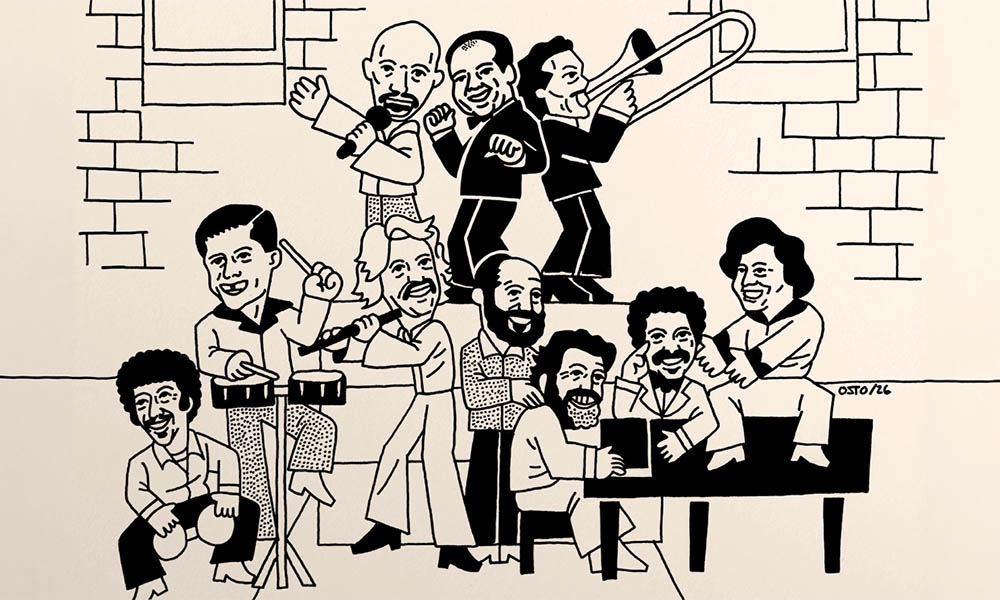
Craft Latino celebrates the label Al Santiago founded in 1956 with a 12-track collection featuring Johnny Pacheco, Charlie and Eddie Palmieri, Pete Rodríguez and the Alegre All Stars.
When Johnny Pacheco played flute in Charlie Palmieri’s band, the two musicians shared a bandstand in New York’s charanga scene. Within a few years, Pacheco was leading a successful charanga of his own, and Palmieri was directing an ensemble that brought them back together. The man behind both ventures was Al Santiago. Seventy years after he founded Alegre Records, Craft Latino revisits those connections on Alegre Records: The Latin Sound of New York (1961–1975), released November 13 on vinyl and digital platforms.
Al Santiago finds his calling
A New Yorker who took over his father’s orchestra before his twentieth birthday, Santiago came to the record business with a bandleader’s ear. He opened a record store and founded Alegre in 1956. One of his earliest successes came in 1960, when he released Johnny Pacheco y Su Charanga, Vol. 1. The young flautist’s feel for mambo found an enthusiastic audience and helped establish the label. His “El Güiro de Macorina” opens the anniversary collection.
The Palmieri brothers follow Pacheco on the record, each with a different idea of what a New York dance band could sound like. On Charlie’s 1973 recording of “La Hija de Lola,” vocalist Vitín Avilés carries the story. Eddie’s “Lázaro y Su Micrófono,” recorded a decade earlier for his second album with La Perfecta, puts the band’s trombones out front. Eddie recorded his first three albums for Alegre, developing a sound that would help shape salsa.

From the boogaloo dance floor to the jazz repertoire
By the mid-1960s, New York musicians were bringing American rhythm and blues into conversation with Afro-Caribbean dance rhythms. Pete Rodríguez’s “I Like It Like That,” which opens the second side of the vinyl edition, became one of boogaloo’s defining hits. Pianist Ricardo Ray and singer Bobby Cruz offer another perspective on the same moment with “Lookie Lookie,” their 1966 single.
Elsewhere, individual voices give the collection much of its character. Chivirico Dávila sings with Orlando Marín’s orchestra on “La Casa,” while Rudy Calzano joins vibraphonist Louie Ramírez on “El Títere.” The closing pair of selections takes listeners from the jazz repertoire to Puerto Rican plena. Roberto Roena and his Megatones reinterpret Paul Desmond’s “Take Five.” Mon Rivera follows with “Monina,” drawing on plena’s role as el periódico cantado, the sung newspaper that turned the events of everyday life into song.
The Alegre All Stars and the road to Fania
Inspired by Panart’s Cuban jam sessions, Santiago formed the Alegre All Stars in 1961. With Charlie Palmieri as musical director, the ensemble drew on a circle that included Pacheco, trombonist Barry Rogers, singer Chamaco Ramírez and timbalero Kako Bastar. “Se Acabó Lo Que Se Daba” and “Tema Alegre” capture the musicians’ playful exchanges. Pacheco later drew on that experience when he formed the Fania All Stars.
Alegre passed to Branston Music in 1966 and to Fania Records in 1975, the year represented here by Ángel Canales’ “Lejos de Ti.” Santiago went on to produce recordings by Celia Cruz, Willie Colón and Mongo Santamaría. The anthology brings his own contribution into focus. He gave musicians room to develop distinctive bands and, in the Alegre All Stars, a place to hear what happened when they played together.
The single-record vinyl edition includes new liner notes in English and Spanish by producer and composer Bobby Marín. Puerto Rican artist Jose Ostolaza, known as Ostomatic, created the hand-drawn cover illustration.
Available for $26.00 (1-LP) on Craft Recordings’ online store.
Tracklist
Side A
- Johnny Pacheco – El Güiro de Macorina
- Charlie Palmieri – La Hija de Lola
- Eddie Palmieri y Su Conjunto La Perfecta – Lázaro y Su Micrófono
- Angel Canales – Lejos de Ti
- Louie Ramirez – El Títere
- Ricardo Ray – Lookie Lookie
Side B
- Pete Rodríguez – I Like It Like That
- Alegre All Stars – Se Acabó Lo Que Se Daba
- Orlando Marín & His Orchestra – La Casa
- Alegre All Stars – Tema Alegre
- Roberto Roena y Sus Megatones – Take Five
- Mon Rivera – Monina

Brazilian mandolin virtuoso Hamilton de Holanda opens a new creative chapter with Nova, a wide-ranging album that brings the traditions of Brazilian instrumental music into conversation with contemporary jazz and sounds from Africa, India, the Caribbean and the Middle East.
Released by Sony Music Brasil on May 20, 2026, the 14-track, 56-minute recording was produced by de Holanda and Marcos Portinari. Recorded in different parts of the world, Nova draws inspiration from the people, places and musical encounters that have marked de Holanda’s extensive travels.
At the heart of the album is the Hamilton de Holanda Trio: de Holanda on 10-string mandolin, Salomão Soares on keyboards and synthesizers, and Thiago “Big” Rabello on drums. Their six-year musical partnership gives the project its central identity, balancing rhythmic precision, melodic freedom and intuitive ensemble interaction.
The trio is joined by an impressive international cast that includes Indian sitarist Anoushka Shankar, French-Lebanese trumpeter Ibrahim Maalouf, Cuban percussionist and vocalist Pedrito Martínez, Angolan singer-songwriter Paulo Flores and Brazilian percussion legend Paulinho da Costa. Other guests include Pedro Martins, Michael Pipoquinha, Pretinho da Serrinha, Mestra Zélia do Prato and Larissa Umaytá.

Opening with “Nova Alvorada,” the album imagines a new dawn rooted in African and Afro-Brazilian traditions. Pedrito Martínez contributes vocals and percussion, Michael Pipoquinha adds electric bass, and singers Tatiana Parra, Vanessa Moreno and Dani Gurgel form the supporting chorus.
Elsewhere, “Som de Baile” channels the energy of Brazilian dance bands, drawing upon the spirit of Banda Black Rio, Jorge Ben Jor and Gilberto Gil. “Frio Lá Fora,” composed during a bitterly cold stay in New York, features Maalouf and Pretinho da Serrinha, while “Pras Crianças” combines an ijexá-based foundation with the resonant sound of Shankar’s sitar. “Luanda (Unidos)” creates a bridge to Angolan semba through the voice and text of Paulo Flores.
Among the album’s most reflective compositions is “Mono no Aware,” which has received an official visualizer. Written by de Holanda and Soares, its title comes from a Japanese expression describing an awareness of life’s impermanence—and the realization that beauty becomes more meaningful because it is temporary.
Recorded at producer and engineer Mario Caldato Jr.’s Los Angeles studio, the piece features Paulinho da Costa on percussion and Pedro Martins on guitar alongside the trio. The gathering connects three generations of Brazilian musicians in a performance that is sophisticated, spacious and emotionally restrained.
The visualizer complements the composition’s contemplative character through imagery evoking delicacy, transition and constant transformation. Rather than presenting a literal storyline, it creates an intimate visual environment in which the music’s mixture of quiet joy and underlying sadness can unfold. The official visualizer is available through Hamilton de Holanda’s YouTube channel.
Now entering his sixth decade, de Holanda remains one of Brazilian instrumental music’s most innovative figures. By expanding the traditional eight-string bandolim into a 10-string instrument, he developed a broader harmonic and melodic vocabulary that has allowed him to move naturally among choro, samba, jazz and global musical traditions.
With Nova, that spirit of invention is guided by gratitude, generosity and an enduring belief in music’s ability to connect people. Tradition and experimentation are not treated as opposites; they become complementary parts of a living musical language.
As de Holanda explains, creating original music with such an extraordinary community of artists is his way of affirming that, regardless of the world’s uncertainties, “the music will continue.”
Nova — Complete Track Listing
1. Nova Alvorada — Hamilton de Holanda
2. Presente pra Sempre — Hamilton de Holanda
3. Nasci — Hamilton de Holanda
4. Som de Baile — Hamilton de Holanda
5. Mono no Aware — Hamilton de Holanda and Salomão Soares
6. Frio Lá Fora — Hamilton de Holanda and Gabriel de Holanda
7. Carrossel — Hamilton de Holanda and Gabriel de Holanda
8. Pras Crianças — Hamilton de Holanda
9. Luanda (Unidos) — Hamilton de Holanda
10. Por Essa Eu Não Esperava — Hamilton de Holanda and Gabriel de Holanda
11. Forrozin de Mestra Zélia — Hamilton de Holanda
12. Choro Fado — Hamilton de Holanda
13. Sol da Noite — Hamilton de Holanda
14. Até Amanhã — Hamilton de Holanda and Salomão Soares
Album Credits
Hamilton de Holanda Trio
Hamilton de Holanda: 10-string mandolin
Salomão Soares: keyboards, synthesizers and Moog
Thiago “Big” Rabello: drums and percussion
Guest Artists and Additional Musicians
“Nova Alvorada”
Pedrito Martínez — percussion and vocals
Michael Pipoquinha — bass
Tatiana Parra — backing vocals
Vanessa Moreno — backing vocals
Dani Gurgel — backing vocals
“Nasci”
Eduardo Neves — tenor saxophone
Aquiles Moraes — trumpet
Rafael Rocha — trombone and horn arrangement
“Som de Baile”
Eduardo Neves — tenor saxophone
Aquiles Moraes — trumpet
Rafael Rocha — trombone and horn arrangement
Larissa Umaytá — percussion
“Mono no Aware”
Paulinho da Costa — percussion
Pedro Martins — guitar
“Frio Lá Fora”
Ibrahim Maalouf — trumpet
Pretinho da Serrinha — percussion
“Pras Crianças”
Anoushka Shankar — sitar
Leander Motta — moringa percussion
“Luanda (Unidos)”
Paulo Flores — voice and spoken text
“Forrozin de Mestra Zélia”
Mestra Zélia do Prato — voice
Production
Producers: Hamilton de Holanda and Marcos Portinari
Executive producer and editing engineer: Marcos Portinari
Assistant producer: Fellipe Cabral
Mixing: Thiago Rabello and Da Pá Virada
Mastering: André Dias
Assistant engineer: Vitor Nery
Photography: Nando Chagas
Label: Sony Music Brasil
Release date: May 20, 2026
Format: Digital album
Duration: Approximately 56 minutes

-

 25 Most Read Posts13 years ago
Juan García-Herreros “Snow Owl” – Normas
-

 25 Most Read Posts15 years ago
Edy Martínez, the Music Architect Behind the Piano
-

 25 Most Read Posts16 years ago
Raphael Cruz Reaffirms His Commitment To Latin Jazz!
-

 25 Most Read Posts11 years ago
Rubén Blades con Roberto Delgado & Orquesta: Son de Panamá