
Albums
Michele Rosewoman’s Dream Project Becomes A Reality
30 YEARS – A MUSICAL CELEBRATION OF CUBA IN AMERICA is a milestone in the history of New Yor-Uba and the fruition of one of Michele Rosewoman’s greatest goals. As Michele eloquently writes in the liner-notes…


30 Years – A Musical Celebration of Cuba in America is a milestone in the history of New Yor-Uba and the fruition of one of Michele Rosewoman’s greatest goals. As Michele eloquently writes in the liner-notes, “New Yor-Uba is the tapestry that weaves together all of my dreams, experiences, knowledge, the people I’ve met, the places I’ve been and the lives I lived.”
Michele Rosewoman’s New Yor-Uba – 30 Years – A Musical Celebration Of Cuba In America (Advance Dance Disques, 2013)
It is my contention that every recording has a compelling back story and “30 Years …” is certainly no exception. The ensemble’s story begins in Oakland, California circa 1970s, where Michele’s parents owned a record shop and exposed her to a wide variety of music, including R&B, jazz, the Blues and sacred music from around the world.
Michele took up the piano at the age of 6 and learned the jazz tradition from her mentors the “old-school” way. From the beginning of her career she was open to possibilities and drawn to things that were rhythmically and harmonically complex. During her teens she took up percussion and was drawn to the rhythms of Africa and the Caribbean, particularly the rhythms of Cuba and Haiti.
In the late 1970s Michele moved to New York, where she performed with jazz luminaries as well as Cuban dance bands. 1980 was a pivotal year for Michele. It was the year that she met Orlando “Puntilla” Rios at Soundscape during an explosively collaborative time between jazz, Cuban and Puerto Rican musicians. “Puntilla” moved to New York from Cuba as part of the “Marielito” wave and brought with him a wealth of knowledge of Cuban Folkloric music. It was through her mentor/student relationship with Puntilla that Michele came to understand that it was possible to infuse her original material with traditional elements, such as batá rhythms, centuries-old Yoruba and Arará chants as well as Abakwa and rumba. The revelation led to the creation of New Yor-Uba, a 14-piece ensemble whose name signifies the progression of the music of the ancient Yoruba people of Nigeria through Cuba and present day New York.
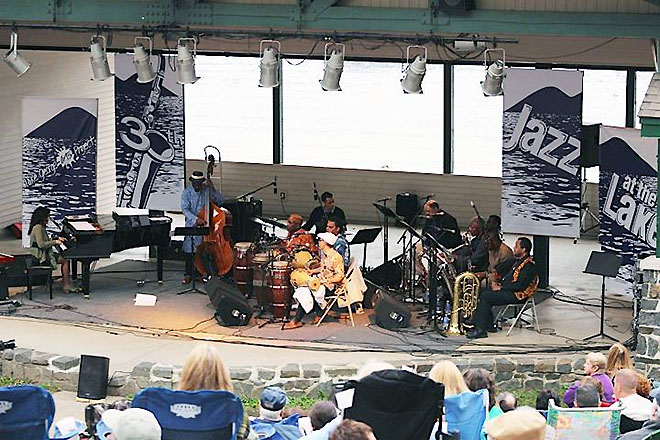
With a grant from the National Endowment of the Arts, the first incarnation of New Yor-Uba debuted at Joseph Papp’s Public Theater in New York in December of 1983. The program, titled, A Musical Celebration of Cuba in America, featured Puntilla and integrated masters of Cuban Folkloric music with a rhythm section, horns and an impressive group of jazz musicians. Following their triumphant debut the ensemble toured Europe and performed at jazz festivals throughout the U.S.
Between 1984 and 1996 Michele recorded 7 highly acclaimed recordings as a leader, the main vehicle being Quintessence, whose repertoire overlaps somewhat with New Yor-Uba but allows for more extended improvisation and places more emphasis on changing meters.
The arrival of percussionist/vocalist Pedro “Pedrito” Martínez from Cuba and the untimely passing of Puntilla in 2008 led to the inevitable passing of the torch and a new, dynamic phase in the development of the ensemble, due in large part to the fact that the new generation of Cuban musicians were more familiar with Cuban Folkloric music and jazz and more adept at navigating the waters, thus giving the new ensemble an affinity and balance that was missing in the original ensemble.
Following a successful Kickstarter campaign, a smaller, leaner New Yor-Uba was conceived. The ensemble made its highly acclaimed debut at the “Roulette,” a trendy auditorium in Brooklyn in April of 2013. As before the configuration featured a core of Cuban folkloric masters (Pedro Martínez, Román Díaz, Abraham Rodríguez, Daniel Carbonell), a dynamic rhythm section (Michele, Yunior Terry and Adam Cruz) and an impressive horn section (Howard Johnson, Oliver Lake, Mike Lee, Vincent Gardner and Freddie Hendrix). Soon after the performance, the ensemble made a bee line for the recording studio and recorded their first album in 30 years, followed by a triumphant performance at Philadelphia’s “Painted Bride.”
The 2 CD-set contains 14 original compositions, the vast majority of which pay tribute to the Orisha deities, who reflect the manifestation of God in the Yoruba religious system. Other tracks include “Perdón,” originally recorded by the Cuban band Yoruba Andabo, the soulful “Earth’s Secrets” and “Old Calabar,” whose haunting chants, powerful Abakwa rhythms and brilliant solos make this one of my personal favorites.
I vividly recall playing the recording the first time, not quite knowing what to expect. Initially, I was struck by the spiritual nature of the music, the pull of the drums and chants, the inescapable beat and the underlying groove. Above all, I am awed by the profundity of the concept and Michele’s ability to execute her vision in such an uncompromising way.
During a recent interview with journalist, Larry Blumenfeld, Michel spoke about the challenges of keeping the music “aligned,” how the percussionists have a tendency to play in front of the beat while the jazz musicians tend to play behind. At the Roulette, I witnessed Michele at the keyboard doing what she does best, focused, in command, ever on the alert for an anomaly, leading the ensemble by example and always in the pocket. Physically, Michele is small in stature, her most prominent features being her wavy, brown hair and ever-present smile, but it’s her inner power, her Aché (the power to make things happen) that adds another dimension to her person.
The recording is dedicated to the memory of Orlando “Puntilla” Ríos, whose wisdom, guidance, influence and pride in being a member of the ensemble was pivotal to laying the foundation for the original ensemble. His spirit is ever-present.
“30 Years …” is an astonishing achievement, deserving of the praise it has received from critics and listeners alike. Look for it on my list of Best Recordings of 2013. Highly recommended.
MICHELE ROSEWOMAN’S NEW YOR-UBA – 30 YEARS – A MUSICAL CELEBRATION OF CUBA IN AMERICA (ADVANCE DANCE DISQUES, 2013)
CD 1: 1 – Divine Passage; 2 – Dance for Agayu; 3 – Natural Light; 4 – Por Ahora y Siempre; 5 – Vamp for Ochún; 6 – Old Calabar; 7 – Rezo a Ochún;
CD2: 1- In Praise of Spiritual Guides; 2 – Perdón; 3 – Obalube; 4 – Where Water Meets Sky; 5 – Agua Dulce de Bosque; 6 – Warrior; 7 – Earth’s Secrets
THE NEW, NEW YOR-UBA: Pedro “Pedrito” Martinez, Román Díaz, Abraham Rodríguez, Daniel Carbonnell, Yunior Terry, Adam Cruz, Freddie Hendrix, Oliver Lake, Mike Lee, Vincent Gardner, Howard Johnson, Michele Rosewoman, Nina Rodríguez.
THE ORIGINAL ENSEMBLE: Orlando “Puntilla” Ríos, Gene Golden, Eddie Rodriguez, Oscar Hernández, Pheeroan akLaff, Rufus Reid, Olu Femi Mitchell, Kelvyn Bell, Michele Rosewoman, Bob Stewart, Howard Johnson, John Stubblefield, Oliver Lake, Rasul Siddik, Baikida Carroll, Butch Morris.
FOR A FULL BIOGRAPHY, DISCOGRAPHY AND EVENT CALENDAR VISIT: www.michelerosewoman.com
BUY MUSIC ON: amazon

NEW YOR-UBA VIDEOS PAST AND PRESENT


For Claudia Acuña, home has never been a fixed destination. It is something carried—in the body, in memory, in language, and in sound.
On Ave de Luz, the Chilean vocalist brings those fragments together with unusual clarity. After three decades in New York, Acuña no longer treats her roots as something to weave quietly into jazz. She places them at the center. Her striking declaration—“I’m coming in with my crown, my poncho, my everything”—captures the album’s spirit perfectly.
Raised in Concepción during Chile’s dictatorship years and later transformed by New York’s jazz scene, Acuña has spent much of her career moving between worlds. Ave de Luz feels like the moment when those worlds stop competing with one another.

A Specifically Chilean Jazz
Acuña has resisted the idea that “Latin jazz” can be reduced to a single vocabulary. Afro-Cuban and Brazilian traditions may dominate the popular understanding of the term, but Latin America contains countless rhythmic, folkloric and indigenous languages.
Her own metaphor is simple: noodles and spaghetti may look related, but they are not the same thing.
That idea shapes Ave de Luz. The album is not merely jazz with Chilean colour added to it. It is music whose identity emerges from cueca, Andean traditions, indigenous sonorities, poetry, migration and improvisation.
The trutruka, charango, zampoña, tormento and Chilean pandero become part of the album’s grammar. They interact with Manu Koch’s piano and keyboards, Carlos Henderson’s bass and Yayo Serka’s drums and percussion without sounding ornamental or exoticized.
Poetry, Memory and Resistance
“Chinga La Ka Chinga” captures one of the album’s most expansive ideas. Festive on the surface, the piece also acknowledges Afro-Chilean and northern Chilean currents, suggesting how celebration can carry history, resistance and cultural memory within its pulse.
Elsewhere, the music turns inward. “Piececitos de Niño,” inspired by Gabriela Mistral, brings poetry and childhood into the album’s emotional landscape, while “Rezo” feels almost elemental: voice, charango, atmosphere and silence shaping a meditation on nature, distance and belonging.
Acuña’s reading of Violeta Parra’s “La Jardinera” is equally significant. Its imagery of planting, tending and healing becomes an apt metaphor for tradition itself. Culture survives not by remaining untouched, but by being replanted. Acuña does precisely that.
The Wind From the South
“Viento del Sur” also carries special resonance, recalling the title of Acuña’s 2000 debut, Wind from the South. Then, the image suggested a Chilean artist arriving in the international jazz world. Here, the meaning has changed.
The south is no longer where she came from. It is something she continues to carry.
That idea finds its fullest expression in the title track. The “bird of light” becomes an image of migration without erasure—a figure moving forward while remaining connected to its place of origin. The metaphor fits Acuña herself.
Her longtime musical relationship with Koch, Henderson and Serka gives Ave de Luz much of its freedom. Years of trust let the ensemble move naturally between folk memory, jazz improvisation and contemporary textures without forcing boundaries between them.
Ave de Luz may be Claudia Acuña’s most complete artistic statement because it no longer asks her identities to compromise.
The crown is experience.
The poncho is memory.
Jazz is the road between them.
And Claudia Acuña travels that road carrying Chile fully into the light.
Album Information
- Artist: Claudia Acuña
- Album: Ave de Luz: Chilean Jazz & Soul
- Label: Delfin Records
- Release date: July 10, 2026
- Genre: Jazz / Vocal Jazz / Chilean jazz
- Format: Digital/streaming
- Final digital release: 7 tracks, approximately 36 minutes
Tracklist
- Chinga La Ka Chinga – (Claudia Acuña, Coch, Hernandez & Serka) – 4:43
- Ave de Luz– (Mario Rojas) – 5:48
- Viento del Sur– (Claudia Acuña & Jason Lindner) – 6:01
- Rezo– (Claudia Acuña) – 3:49
- Piececitos de Niño– (Based on a poem of Gabriela Mistral / Music by Claudia Acuña) – 6:10
- Un Gorro de Lana– (Víctor Acosta) – 4:18
- La Jardinera– (Violeta Parra) – 6:01
Personnel
- Claudia Acuña – vocals, percussion/claps, tormento; producer
- Manu Koch – piano and keyboards (tracks 1, 2, 3, 5)
- Carlos Henderson – bass
- Yayo Serka – drums and percussion
- Pablo Vergara – piano (tracks 6, 8)
- Andrés Pollak – piano, organ; producer (track 7) | organ (track 1)
- Pablo Zárate – accordion, Chilean pandero (track 2)
- Fredy Torralba – traditional Chilean/Andean instruments including charango, trutruka and zampoña
- Paulina García – spoken word (track 6)
- Daniel Kelley-Acuña – vocals (track 6)
Production Credits
Produced by Claudia Acuña and Andrés Pollak. Most of the sessions were recorded at East Side Sound in New York in November 2025, with “Ave de Luz” recorded at TOC Música in Santiago in October 2025 and additional recording completed at Banduria Studio in Santiago. Andrés Pollak handled engineering on the principal New York sessions; Rafael Chaparro engineered the Santiago title-track session with Javier Lizana assisting. Marc Urselli mixed and mastered the project.

With La Malinche, Eva Cortés delivers one of the most ambitious recordings of her career—a project in which history, identity, migration and music converge around one of the most contested figures in the Americas.
Malintzin, also known as Doña Marina or La Malinche, has long been portrayed through conflicting narratives: interpreter, intermediary, mother of mestizaje, victim, survivor and, in later nationalist mythology, traitor. Cortés does not try to settle that debate. Instead, she uses Malintzin as a symbol of cultural transition, displacement and survival.
That choice makes particular sense for an artist whose own life has unfolded across borders. Born in Honduras (Central America), shaped culturally in Seville (Spain) and later immersed in New York’s jazz community, Cortés has always made music from the space between traditions. On La Malinche, that in-between space becomes the heart of the album.

A Music of Crossings
The album brings together flamenco, Latin jazz, contemporary jazz and Indigenous-inspired imagery without turning the result into a forced fusion.
Rather than attempting to recreate pre-Columbian Mexican music literally, Cortés evokes Indigenous memory through percussion, communal voices, repetition and themes of ancestry, earth and maize. Flamenco enters through Spanish guitar, vocal inflection and the expressive grit associated with cante. Jazz supplies the harmonic freedom and improvisational space that allow those elements to interact.
The musicians surrounding Cortés are crucial to that balance. Pianists Pepe Rivero, Jon Cowherd and Zaccai Curtis, bassists Christian McBride, Luques Curtis and Reinier Elizarde “Negrón,” and drummers Antonio Sánchez, Adam Cruz and Georvis Pico give the album both rhythmic strength and harmonic flexibility. Roman Filiú, Paco Heredia, Marvin Sewell, Bandolero and others expand the palette further. The result is music that never feels boxed into one category.
The Voice at the Center
Cortés’ singing remains the album’s most powerful instrument. Her phrasing can be loose and conversational, then suddenly sharpen into something more urgent and flamenco-inflected. She moves between reflection, mourning, protest and defiance without sacrificing musical control.
Most importantly, she refuses to define Malintzin through betrayal. Her interpretation focuses instead on endurance and complexity.
The opening “Abuelita Malinche” immediately makes that clear. By calling her “Abuelita,” Cortés transforms Malinche from a figure of accusation into an ancestral presence. The arrangement blends Latin-jazz movement with flamenco coloration, while her wordless vocal passages move naturally between scat and cante.
“Hij@s del Maíz” extends that idea of cultural mixture. Paco Heredia’s guitar, Pepe Rivero’s piano, Antonio Sánchez’s drums and the accordion create a sound that travels across regions rather than belonging to one. Maize becomes a symbol of Indigenous continuity, while the music reflects the constantly changing character of mestizaje itself.
From History to the Present
The album becomes even more powerful when it connects the past to contemporary realities.
“Letters to Heaven” and “Remember Me” introduce themes of Indigenous loss and the disappearance of women from both historical memory and present-day communities. “Sur Global” shifts toward resistance, combining rhythmic drive with a broader reflection on colonialism, migration and inequality.
Then “Spanish Harlem” brings the journey firmly into the present. Horns, flute, tumbao and call-and-response place Cortés within New York’s Latin-jazz tradition, completing a musical path that stretches from ancestral memory to the modern city.
A Major Statement
La Malinche is more than an album built around a historical figure. It is a meditation on who controls history, who gets remembered and how identity continues to change across generations and borders.
Cortés turns her own musical hybridity into the album’s central idea. Jazz, flamenco and Latin American traditions do not simply coexist here—they help tell the story.
The result is one of her strongest and most focused recordings to date: emotionally direct, musically sophisticated and deeply rooted in the ongoing conversation between memory and transformation. La Malinche is not about recovering a pure past. It is about reclaiming the right to reinterpret it.
Album Information
- Artist: Eva Cortés
- Album: La Malinche
- Label: Truth Revolution Records / TRRcollective
- Release: June 2026
- Official press release date: June 5, 2026
- TRRcollective Bandcamp release date: June 19, 2026
- Format: CD / Digital
- Number of tracks: 11
- Total running time: 51:53
- Genre: Jazz / Latin Jazz / Flamenco / Afro-Latin
- Recorded in: Madrid, Spain, and Little Falls, New Jersey, USA
Tracklist
- Abuelita Malinche — 4:35
- A Tribo do Vento — 5:46
- Soy el Aire — 5:31
- Light and Sorrow — 3:59
- Hij@s del Maíz — 4:24
- Letters to Heaven — 5:04
- Remember Me — 3:28
- Sur Global — 5:43
- No Me Limites — 4:33
- Indians of All Tribes — 3:53
- Spanish Harlem — 4:57
Personnel
- Eva Cortés — vocals, composer, lyricist, backing vocals
- Pepe Rivero — piano, keyboards, arrangements
- Jon Cowherd — piano
- Zaccai Curtis — piano, keyboards
- Christian McBride — bass
- Luques Curtis — bass
- Reinier Elizarde “Negrón” — bass
- Paco Heredia — Spanish guitar, guitar, arrangements
- Marvin Sewell — guitar
- Roman Filiú — saxophone, flute, backing vocals
- Bobby Martínez — saxophone
- Manuel Machado — trumpet
- Antonio Serrano — harmonica
- Javier Colina — accordion
- Bandolero — percussion
- Roland Guerrero — percussion
- Antonio Sánchez — drums
- Adam Cruz — drums
- Georvis Pico — drums, vocal solo, backing vocals
Production Credits
- Produced by: Eva Cortés, Roman Filiú and Pepe Rivero
- Label: Truth Revolution Records / TRRcollective
- Session One: Camaleón Music Studio, Madrid, Spain
- Recording Engineer, Madrid: Diego Román
- Session Two: Studio Mozart, Little Falls, New Jersey, USA
- Recording Engineer, New Jersey: Kostadin Kamcev
- Mixing: David Darlington
- Mastering: David Darlington
- Mixing and Mastering Studio: Bass Hit Studios, New York, NY
- Photography: Noah Shaye

The title Abriendo Puertas—“Opening Doors”—captures the spirit of guitarist Roni Ben-Hur’s latest recording with unusual precision. Recorded in Havana with an accomplished group of Cuban musicians, the album is built not around the novelty of a visiting jazz guitarist encountering Cuban music, but around something more meaningful: musicians listening closely enough to find a common language.
Ben-Hur has spent much of his career moving naturally between musical worlds. Born in Israel to a Tunisian family and shaped professionally by New York’s jazz community, his playing draws from bebop, Brazilian music, Mediterranean traditions and Latin rhythms without sounding like a collection of influences. His years with pianist and mentor Barry Harris helped establish the melodic clarity, swing and understated sophistication that remain central to his guitar style. On Abriendo Puertas, those qualities fit remarkably well within a Cuban setting.

The key creative partner is pianist Alejandro Falcón, who contributes four of the seven compositions: the title track, “Gua’ One Blues Pal Bobby,” “Lo que es del César” and “El Teide.” Rather than treating Ben-Hur as a soloist placed in front of a Cuban rhythm section, Falcón helps create an ensemble language in which guitar and piano continuously exchange roles. Their compatibility is evident from the opening title track, where rhythmic momentum and lyrical improvisation develop patiently rather than through display.
“Gua’ One Blues Pal Bobby” pushes the conversation toward the blues while retaining a strong Cuban rhythmic identity. It is one of the album’s most spirited performances, illustrating how readily the vocabulary of jazz can coexist with the rhythmic imagination surrounding Ben-Hur in Havana. By the time the ensemble reaches “Lo que es del César” and “El Teide,” the distinction between guest and host has largely disappeared. What remains is a cohesive band responding to one another in real time.
The album’s romantic center comes through three classic Latin American songs. José Antonio Méndez’s “Mi Mejor Canción” brings the intimacy of the Cuban filin tradition into the program, while Osdalgia Lesmes appears on Isolina Carrillo’s “Dos Gardenias” and Armando Manzanero’s “Esta tarde vi llover.”
Lesmes brings warmth and emotional directness to both performances, and Ben-Hur proves once again what a sensitive accompanist he can be. His guitar surrounds the voice rather than competing with it, reflecting an approach he has developed through years of working with singers, including the late Brazilian vocalist Leny Andrade. Ben-Hur has spoken of the importance of leaving space for vocalists and allowing melody and lyric to remain at the center of an arrangement.
That same sense of space benefits the entire recording. Pedro Pablo Gutiérrez on acoustic bass, Ruy López-Nussa on drums and Octavio Rodríguez Rivera on percussion provide a foundation that is rhythmically rich without becoming overcrowded. Tenor saxophonist Emir Santa Cruz, featured on four tracks, adds another expressive voice and gives several performances a broader jazz-ensemble character.
Recorded at DBega Studios in Havana in November 2025, Abriendo Puertas is part of the Cuban Notes recording series co-produced by Ben-Hur and Dot Time Records founder Johanan “Jo” Bickhardt. Yet the album succeeds beyond the concept behind the series.
Its strength is ultimately found in the musicians themselves. Nobody appears interested in proving how effortlessly jazz and Cuban music can be combined. They simply play together until those distinctions become secondary.
For listeners who appreciate expressive jazz guitar, Cuban music and recordings where collaboration matters more than spectacle, Abriendo Puertas is easy to recommend. Warm, sophisticated and deeply conversational, it finds Roni Ben-Hur opening another musical door—and discovering an ensemble waiting on the other side.
Album Information
Artist: Roni Ben-Hur
Album: Abriendo Puertas
Label: Dot Time Records
Catalog: DT9192
Genre: Jazz / Latin Jazz
Release Date: June 26, 2026
Recorded: November 2025
Studio: DBega Studios, Havana, Cuba
Format: CD / Digital
Program: 7 tracks, approximately 49 minutes.
The project is part of Cuban Notes, co-produced by Johanan “Jo” Bickhardt and Roni Ben-Hur. It follows Alejandro Falcón’s Falcón in Blue as the second album in the series.
Tracklist
1. Abriendo Puertas – Alejandro Falcón – 8:12
2. Mi Mejor Canción – José Antonio Méndez – 6:32
3. Dos Gardenias – Isolina Carrillo – 5:23
4. Gua’ One Blues Pal Bobby – Alejandro Falcón – 9:23
5. Esta tarde vi llover – Armando Manzanero – 5:56
6. Lo que es del César – Alejandro Falcón – 6:17
7. El Teide – Alejandro Falcón – 7:49
Personnel Credits
Roni Ben-Hur — guitar
Alejandro Falcón — piano
Pedro Pablo Gutiérrez — acoustic bass
Ruy López-Nussa — drums
Octavio Rodríguez Rivera — percussion
Emir Santa Cruz — tenor saxophone, tracks 1, 4, 5 and 7
Osdalgia Lesmes — vocals, tracks 3 and 5
Production Credits
Executive Producer: Johanan “Jo” Bickhardt
Co-Producer: Roni Ben-Hur
Recorded at: DBega Studios, Havana
Recording date: November 2025
Sound Engineer: Carlos D’Bega
Label: Dot Time Records

-

 25 Most Read Posts13 years ago
Juan García-Herreros “Snow Owl” – Normas
-

 25 Most Read Posts14 years ago
Edy Martínez, the Music Architect Behind the Piano
-

 25 Most Read Posts16 years ago
Raphael Cruz Reaffirms His Commitment To Latin Jazz!
-

 25 Most Read Posts11 years ago
Rubén Blades con Roberto Delgado & Orquesta: Son de Panamá